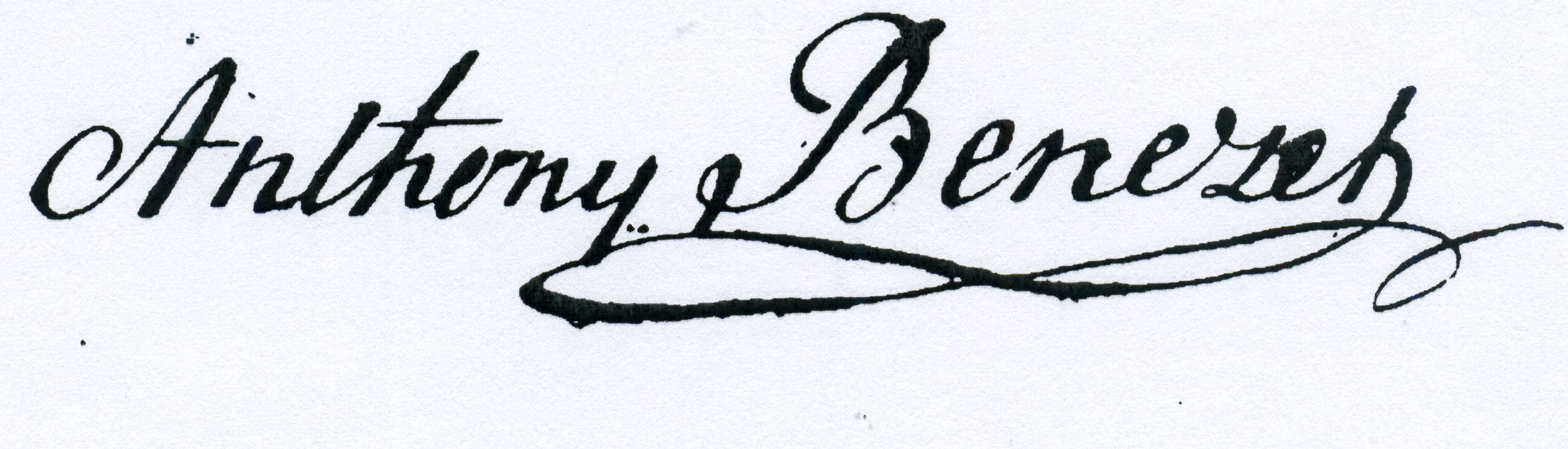
by Maryse Trannois
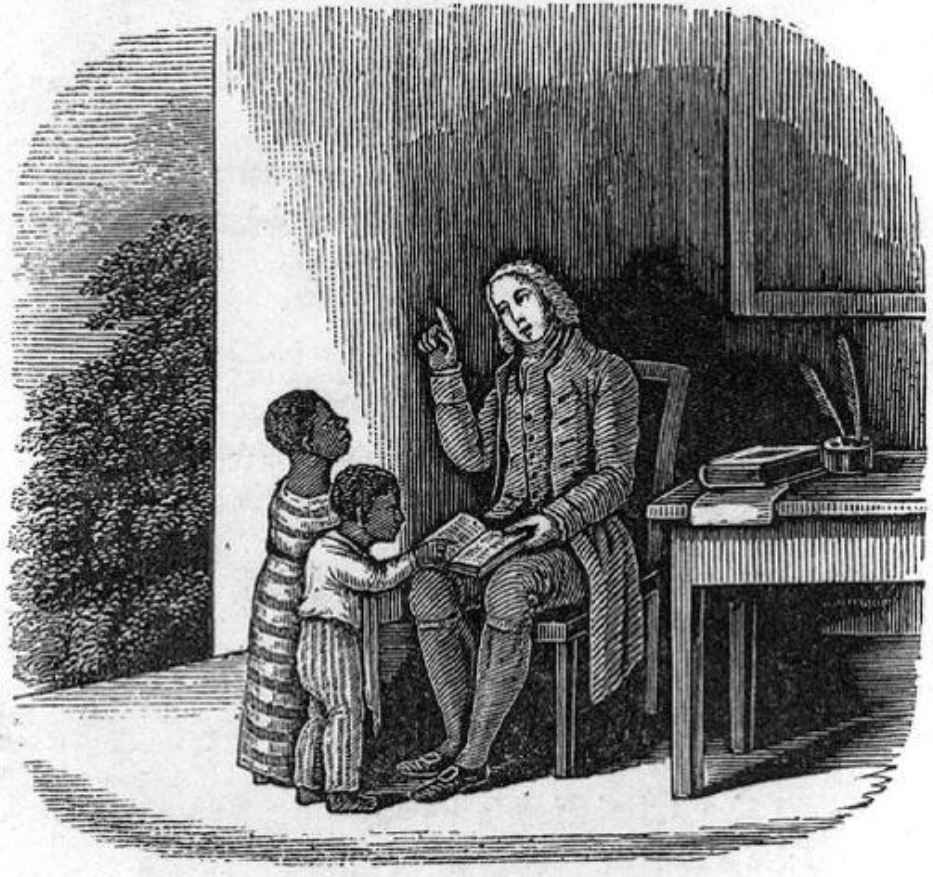
"He was the offspring of humanity,
And every child of sorrow was his brother.""Il est le fruit de l'humanité, et chaque enfant de la douleur était son frère."
"Hij was de jongen van de mensheid, en elk kind van verdriet zijn broer."
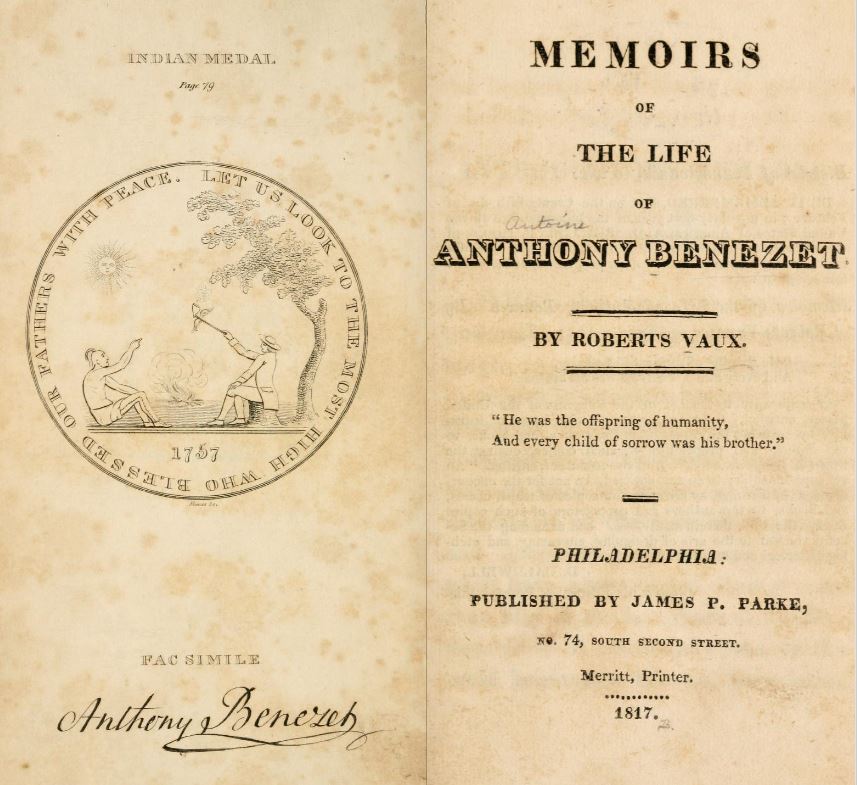
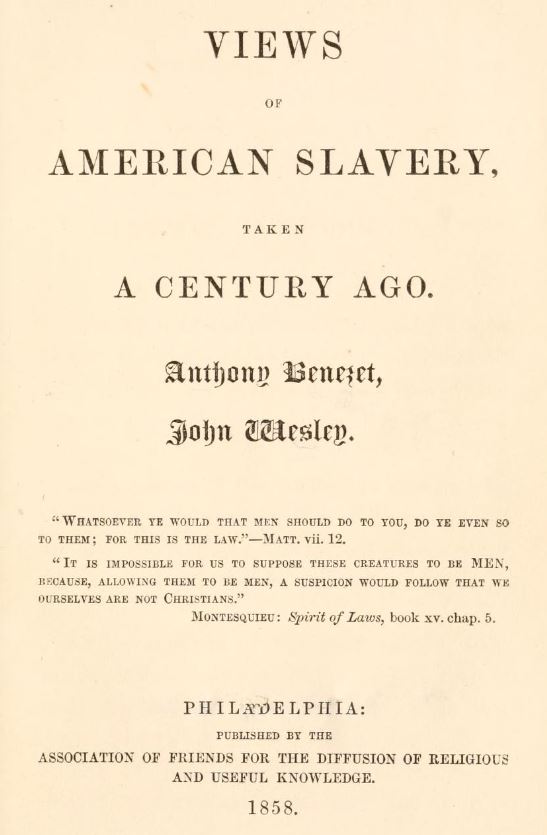
All that is known about Antoine Bénézet comes from a book about the family that his father and grandfather had in their possession. His first biography, published in 1816, was written by Roberts Vaux: "Memoirs of the life of Anthony Bénézet".
Tout ce que l’on sait sur Bénézet provient d’un livre de famille que son grand-père et son père ont tenu. Sa première biographie, qui est parue en 1816, a été écrite par Roberts Vaux : « Memoirs of the life of Anthony Bénézet. »
Alles wat bekend is over Antoine Bénézet komt uit een boek over de familie die zijn vader en grootvader was in hun bezit zijn. Zijn eerste biografie, gepubliceerd in 1816, werd geschreven door Roberts Vaux: "Memoires over het leven van Anthony Bénézet".
Here we see the illustration on the first page of the memoirs of Bénézet. William Penn is sitting under a tree giving the peace pipe to an Indian. It shows the sun, perhaps a symbol of God and the friendship that must unite all mankind. The circumscription reads: "Let us look to the most high who blessed our Fathers with peace."
Cette médaille figure sur la première page des Mémoires de Bénézet. On y voit William Penn assis sous un arbre, qui donne le calumet de la paix à un indien. Il indique le soleil, peut-être un symbole entre l’amitié qui doit unir les hommes.
Hier zien we de afbeelding op de eerste pagina van de memoires van Bénézet. William Penn is onder een boom zitten dus vast aan een indiaan. Het toont de zon, misschien een symbool van God en de vriendschap die moeten verenigen de gehele mensheid. De omschrijving luidt: "Laten we kijken naar de meest hoge die gezegend onze vaderen met vrede".
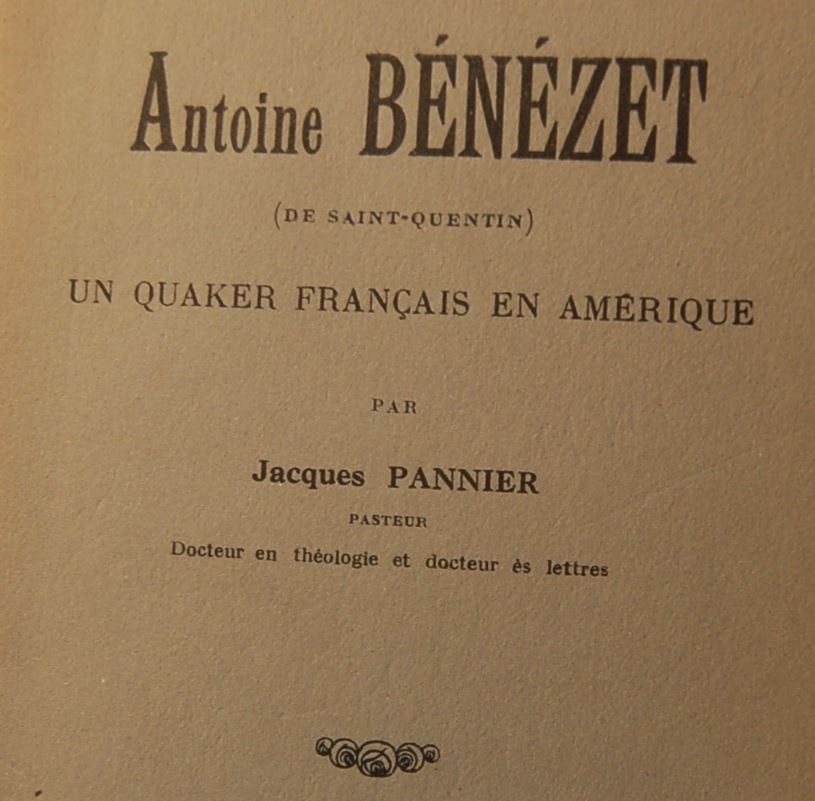
Jacques Pannier, in his research on Bénézet, shows Bénézet under a shaft of light. I confess that I prefer his version. [Reference:]
Jacques Pannier, dans son étude sur Bénézet, y voit, lui, Bénézet sous l’arbre. J’avoue que je préfère sa version.
Jacques Pannier, in zijn onderzoek Bénézet, toont Bénézet onder een as van licht. Ik moet bekennen dat ik liever zijn versie.
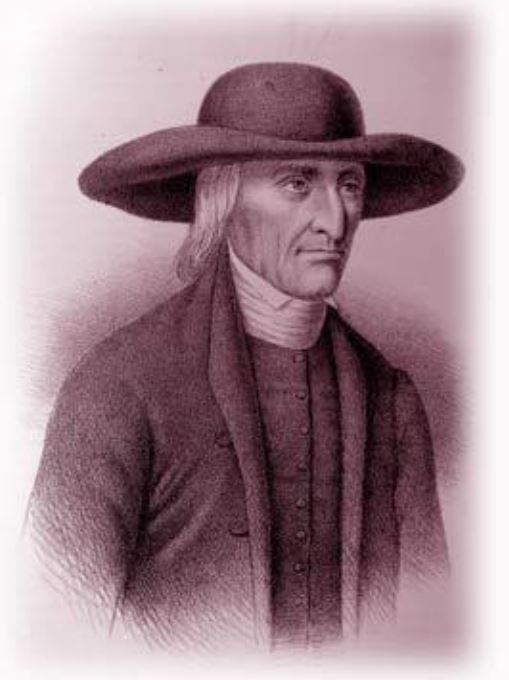
Robert Vaux gave us a description of Antoine Benezet. He was small in stature; there was nothing banal about his bearing. His face constantly expressed great benevolence but his features were far from handsome. He was quite aware of this shortcoming because when a friend once expressed a desire to have his portrait he replied, "Oh, No! My vile face must not pass into posterity!"
Robert Vaux nous le décrit ; Il était petit de taille ; son attitude n’avait rien de banal. Son visage exprimait constamment une grande bienveillance, mais ses traits étaient loin d’être beaux. Il s’en rendait parfaitement compte lui-même : un ami ayant une fois exprimé le désir de posséder son portrait, il répondit ; « Oh ! non ! ma vilaine figure ne doit pas passer à la postérité. »
Robert Vaux gaf ons een beschrijving van Antoine Benezet. Hij was klein van stuk; niets banaal over zijn lager. Zijn gezicht steeds blijk gegeven van grote goedertierenheid maar zijn functies werden ver van handsome. Hij was heel bewust van deze tekortkoming want toen een vriend eenmaal sprak de wens uit om zijn portret dat hij antwoordde: "Oh, nee! Mijn walgelijke gezicht mag niet in het nageslacht!"
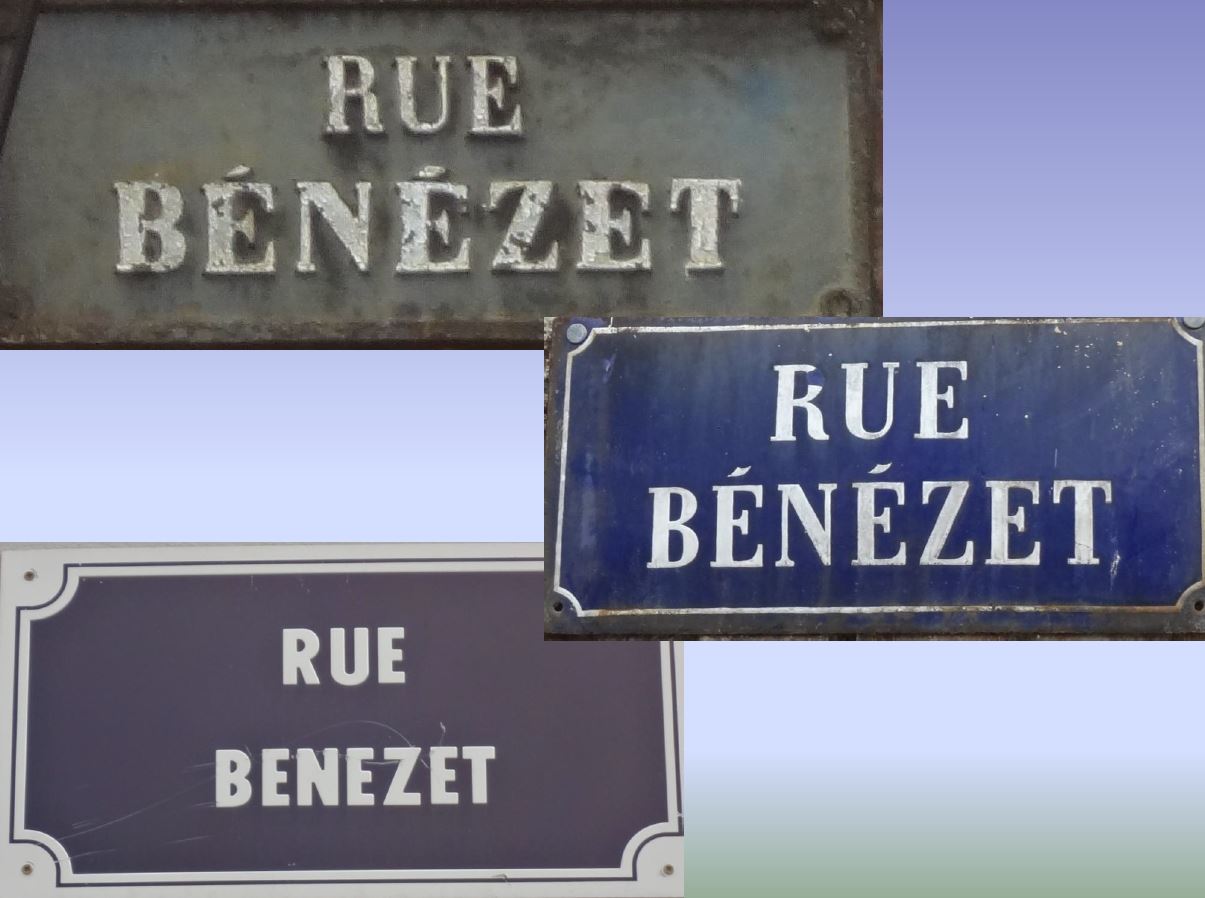
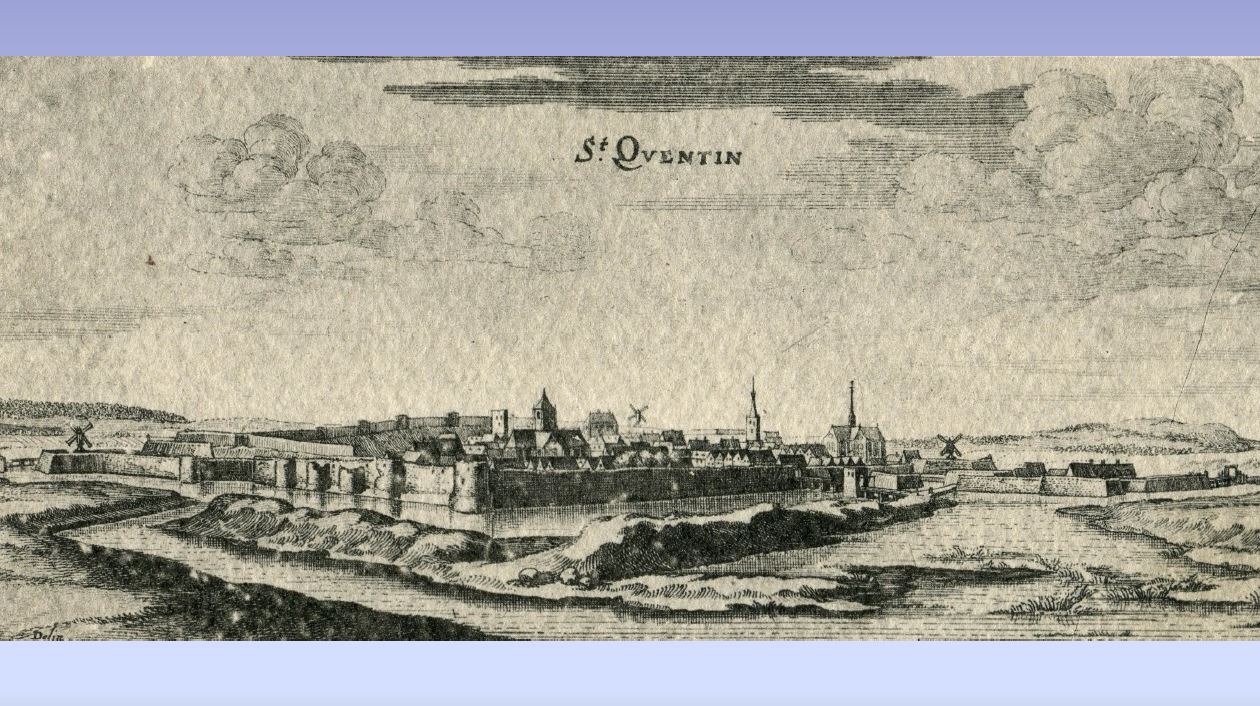
In Saint Quentin there is a street in the neighborhood of Remicourt, called Rue Bénezet. It begins at Boulevard Gambetta and ends at the bottom of Rue de Mulhouse. Therefore we wonder who this street was named after.
Il existe à Saint-Quentin, une rue dans le quartier de Remicourt, appelée rue Bénezet. Elle commence Boulevard Gambetta et se termine au bas de la rue de Mulhouse. On peut se poser la question : pourquoi la municipalité a nommé cette rue ainsi ?
In Saint Quentin is een straat in de buurt van Remicourt, genaamd Rue Bénezet. Het begint bij de Boulevard Gambetta en eindigt aan het eind van de Rue de Mulhouse. Daarom vragen we ons af wie deze straat is vernoemd.
Naturally, when we try to research something we no longer look at an encyclopedia, but go to Wiképédia on the internet. And here is what we find:
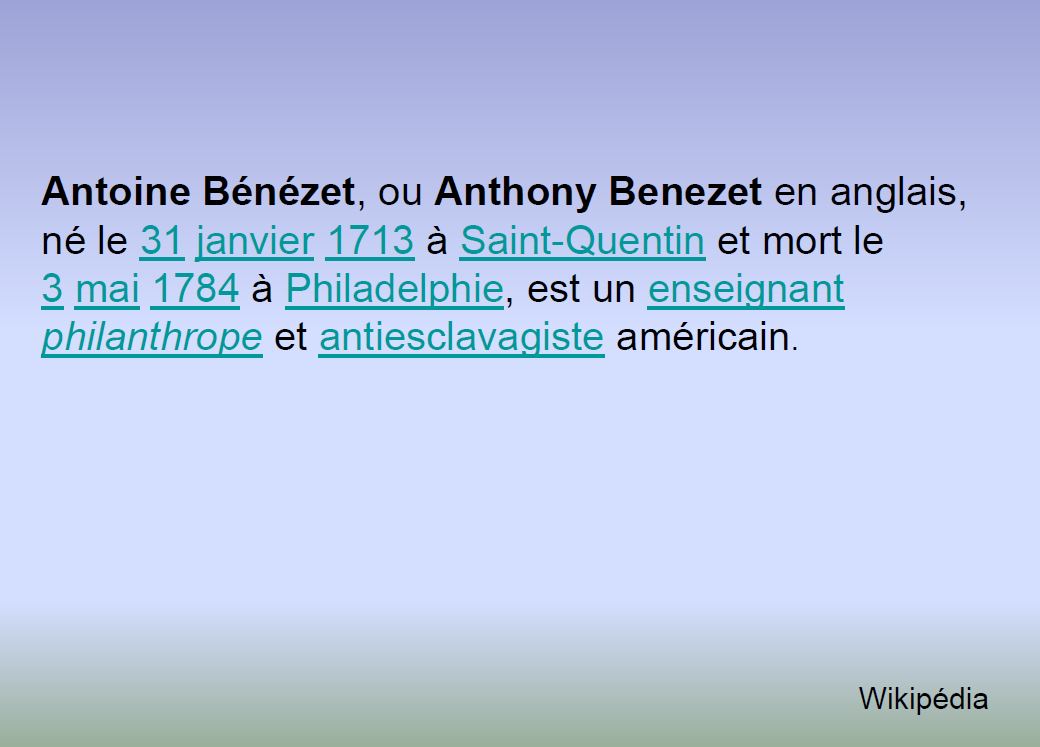
Antoine Bénézet or (Anthony Bénézet in English), born on 31 January 1713 in Saint-Quentin, death on 3 May 1784 in Philadelphia, a teacher, philanthropist and American anti-slavery proponent.Maintenant, lorsque nous cherchons quelque chose, on ne regarde plus dans le dictionnaire mais dans Wiképédia. Voilà ce que l’on y trouve :
Antoine Bénézet ou (Anthony Bénézet en anglais), né le 31 janvier 1713 à Saint-Quentin, mort le 3 mai 1784 à Philadelphie, est un enseignant philanthrope et antiesclavagiste américain.Natuurlijk, als we proberen om onderzoek te doen naar iets wat we niet langer kijken naar een encyclopedie, maar ga naar Wiképédia op het internet. En dit is wat we zoeken:
Antoine Bénézet of (Anthony Bénézet in Engels), geboren op 31 januari 1713 in Saint-Quentin, overleden op 3 mei 1784 in Philadelphia, een leraar, filantroop en Amerikaanse anti-slavernij voorvechter.Therefore he was born in Saint-Quentin, which explains the name of the street. And his death on 3 May 1784 was in Philadelphia. So he was in the USA? A teacher? A Philanthropist? Slavery? This is a person who seems most interesting! It seems remarkable that, in the eighteenth century, a man from Saint-Quentin would leave for America at the height of the colonial period to become an anti-slavery proponent, teacher and philanthropist.
Il est donc né à Saint-Quentin, ce qui explique le nom de la rue et mort le 3 mai 1784 à Philadelphie ? Aux USA ? Il était enseignant ? philanthrope ? antiesclavagiste ? Voilà un personnage qui semble plus qu’intéressant. On peut s’étonner qu’au XVIIIe siècle un Saint-Quentinois parte aux USA en pleine période coloniale et devienne antiesclavagiste, enseignant et philanthrope de surcroît.
Daarom werd hij geboren in Saint-Quentin, vandaar de naam van de straat. En zijn dood op 3 mei 1784 werd in Philadelphia. Zo was hij in de VS? Een leraar? Een filantroop? Slavernij? Dit is een persoon die zeer interessant! Het is merkwaardig dat in de achttiende eeuw, een man vanuit Saint-Quentin zou vertrekken naar Amerika ter hoogte van de koloniale periode tot een anti-slavernij wegbereidster, docent en filantroop.
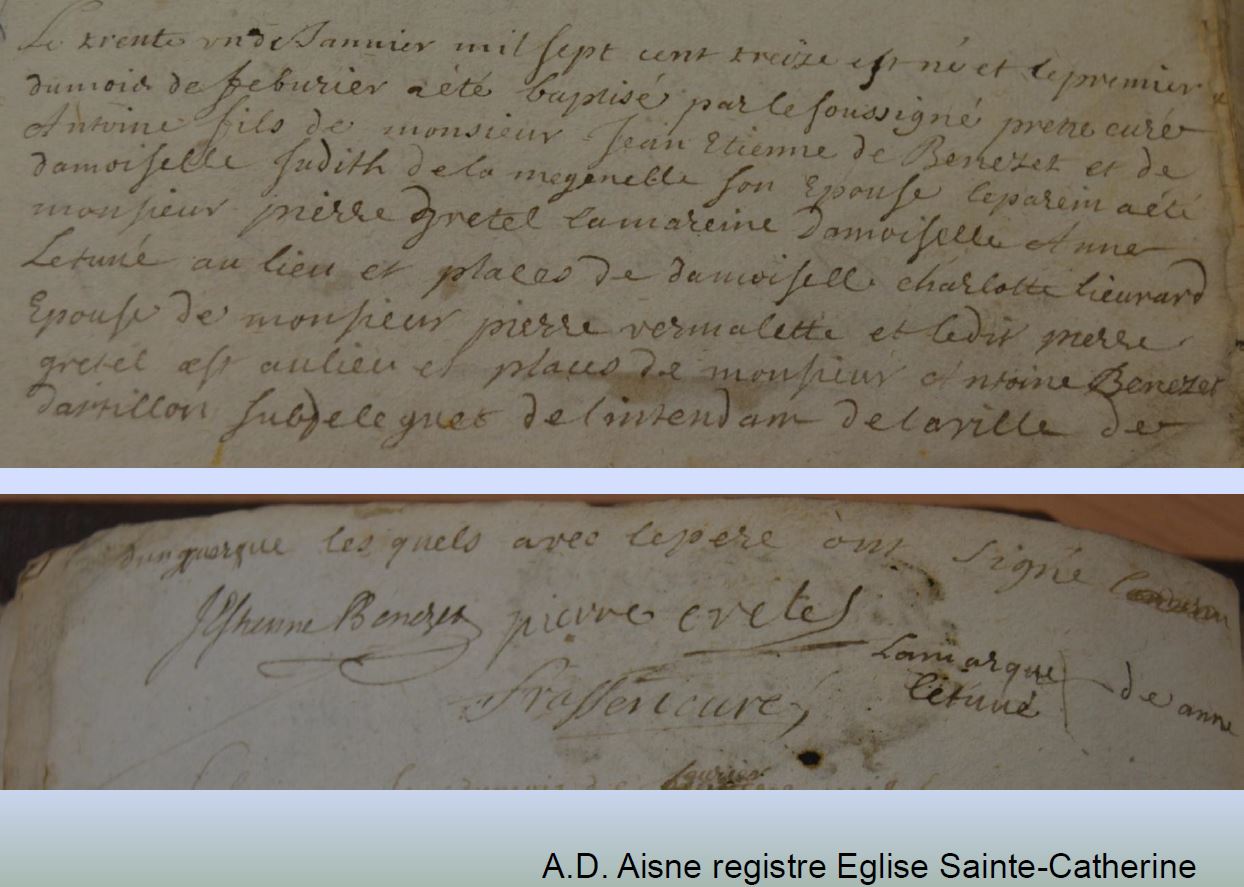
Antoine Bénézet was born in Saint-Quentin. His record of birth appears on one of the registers held in the archives of the civil state.
Antoine Bénézet est bien né à Saint-Quentin. Son acte de naissance figure sur un des registres de l’Etat Civil, aux Archives Départementales.
« Le trente et un de janvier mille sept cent treize est né, et le premier jour du mois de février a été baptisé par le soussigné prêtre curé, Antoine, fils de Monsieur Jean Etienne de Bénézet et de demoiselle Judith de la Megenelle, son épouse. Le parrain a été Monsieur Antoine Bénézet d’Artillon, subdélégué de monsieur l’Intendant de la ville de Dunkerque et la marraine, damoiselle Charlotte Lieurart, épouse de Monsieur Pierre Vermalette, au lieu et place desquels ont répondu pour le parrain Pierre Catel et pour la marraine, Anne Létuvé, lesquels ont signé. Frassen, curé de la paroisse de Sainte-Catherine de Saint-Quentin. »Antoine Bénézet werd geboren in Saint-Quentin. Zijn record van geboorte verschijnt op één van de registers worden bewaard in de archieven van de burgerlijke staat.
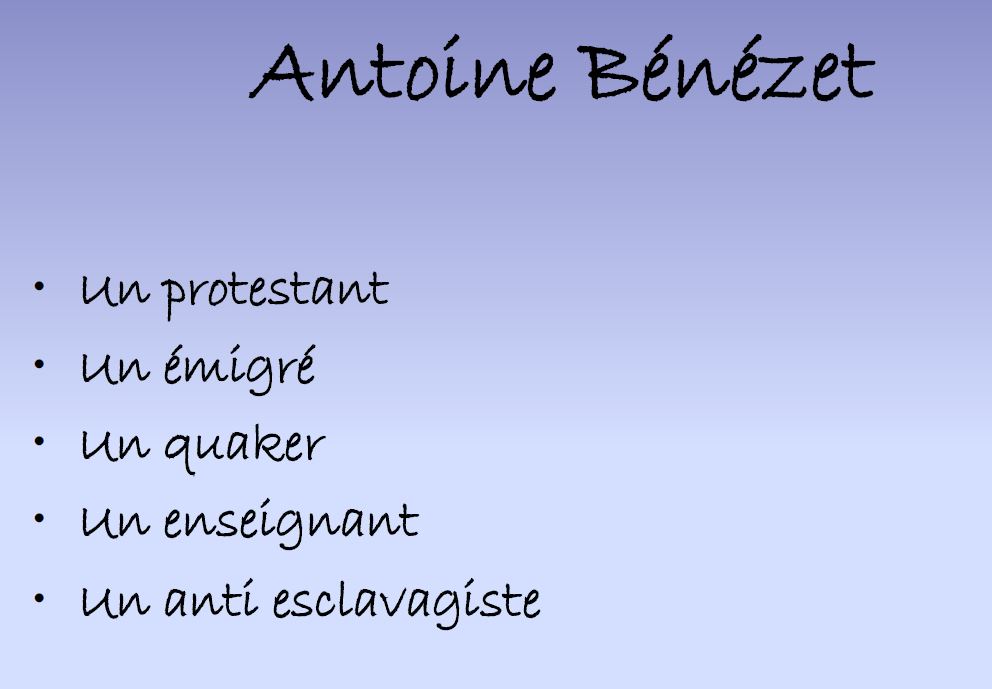
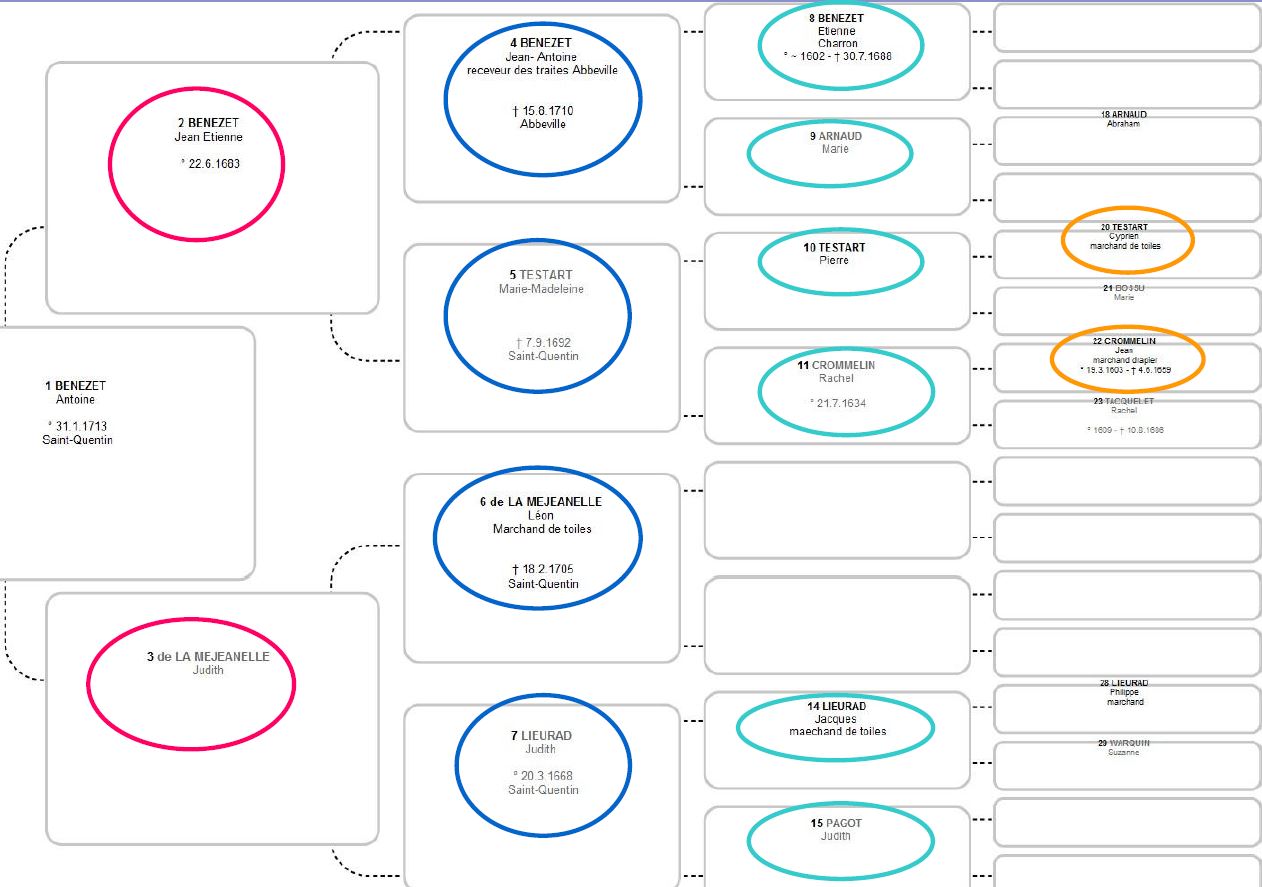
Upon looking more closely at the genealogical tree of Antoine Bénézet one quickly realizes that there are some well-known names of the city of Saint Quentin in his ancestry - people who happen to have been Protestants.
En regardant de plus près l’arbre généalogique d’Antoine Bénézet on se rend vite compte qu’il y a dans son ascendance des noms très connus dans la ville qui sont eux aussi protestants.
Op zoek naar de stamboom van Antoine Bénézet een snel beseft dat er enkele bekende namen van de stad Saint Quentin in zijn voorouders - mensen die toevallig zijn protestanten.
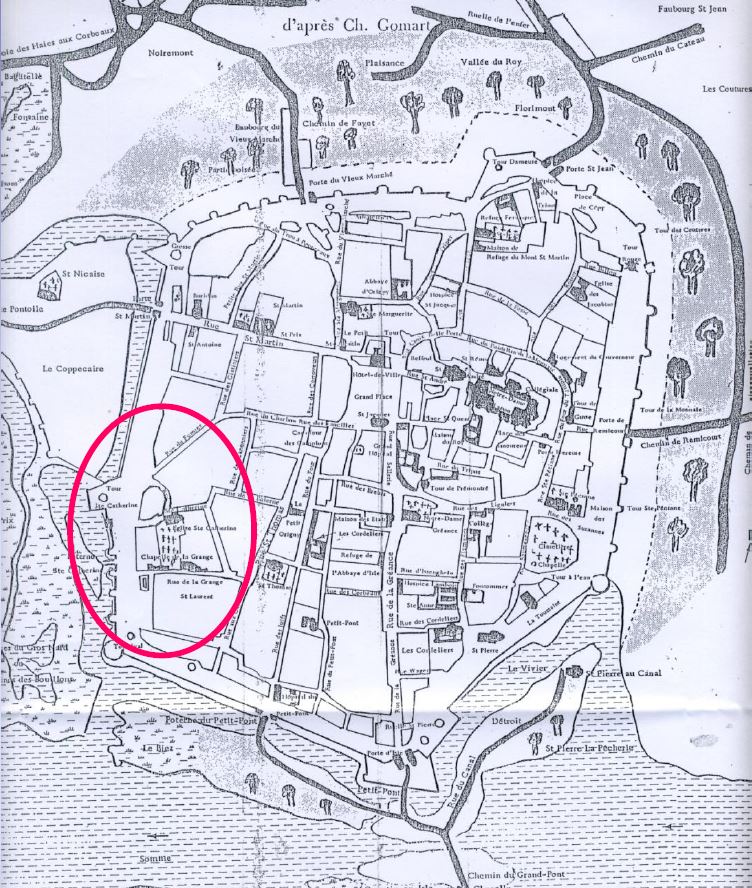
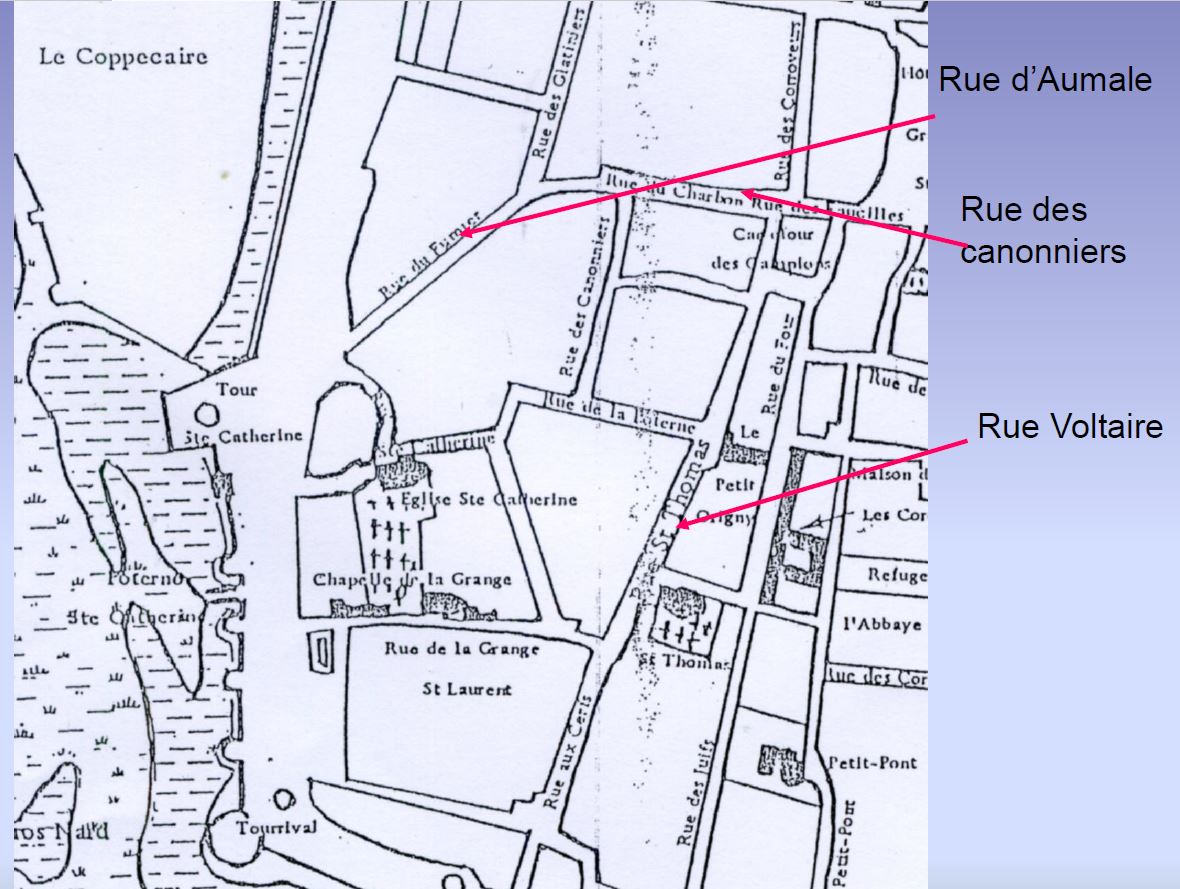
Saint QuentinIt is in the neighborhood called Sainte-Catherine where the biggest merchants in the city lived: the Joncourts, The Seruriers, the Testarts, and all were Protestants.
C'est dans le quartier Sainte-Catherine que vivent les plus gros marchands de la ville : les Joncourt, les Le Serurier, les Testart, et ce sont tous des protestants.
Het ligt in de wijk, genaamd Sainte-Catherine waar de grootste handelaren in de stad woonde: de Joncourts, De Seruriers, de Testarts en alle protestant waren.
This is what the streets are named today.
C'est ce que les rues sont nommées d'aujourd'hui.
Dit is wat de straten zijn vernoemd.
Antoine Benezet's parents
• His father is Jean Etienne de Bénézet. Protestant merchant
• His mother, Judith de la Mejeanelle, Protestant.His grandparents
• Jean-Antoine Bénézet
• Marie-Madelaine Testart.
Merchant in Abbeville in 1682, provincial controller of farms in Picardy, situated in Saint-Quentin in 1689. Jean-Etienne Bénézet provides his family relative protection for a while because he had rendered services in the administration of state finances. Tax collector at Abbeville and then Director at Saint-Quentin, he returned to Abbeville after the death of his wife. He died suddenly. Religion Protestant:
• Léon de la Méjeanelle. Cloth merchant, protestant, is buried in the church of St. Thomas. He is a bourgeois of the city.
• Judith Lieurart. Protestant religion, she abjured under the coercion of 17 November 1685 in Saint-Quentin before the parish priest of Sainte-Catherine.His great-grandparents
• Etienne Bénézet, Protestant, born around 1602 at Congénies, in the Guards. Died on 30 July 1688 at Calvisson, always in the Guards. Member of the Consistory in the symposium of Nimes in December 1653. Charron until 1660. Consul in 1661, Bourgeois in 1665. He is witness to the baptisms and on death registries of Protestants in 1685. Death at 86 years, he received the sacraments of Confession and extreme unction if one believes the act of burial of the parish priest.
• Marie Arnault, protestant
• Pierre Testart. Protestant and merchant. He appears on the list of Calvinists of Picardy. Fugitive of Saint-Quentin, he emigrated in 1685 due to religious persecution. His Father Cyprian Testart lived in the Saint-Thomas quarter and it was in his garden that a large number of protestants were buried.
• Rachel Crommelin. Protestant, died during the birth of her eighth child.Ses Parents
• Son père est Jean Etienne de Bénézet. Marchand protestant
• Sa mère, Judith de la Mejeanelle, protestante.Ses grands-parents
• Jean-Antoine Bénézet
• Marie-Madelaine Testart.
Marchand à Abbeville en 1682, contrôleur provincial des fermes de Picardie à Saint-Quentin en 1689, Jean-Etienne Bénézet assure à sa famille une relative protection pendant un certain temps, car il a rendu des services dans l'administration des finances de l'Etat. Receveur des traites à Abbeville puis directeur à Saint-Quentin, il retourne à Abbeville après la mort de sa femme. Il meurt subitement. Religion : Protestante
• Léon de la Méjeanelle. Marchand de toiles, protestant, est inhumé dans l’église Saint-Thomas. C’est un bourgeois de la ville
• Judth Lieurart. Religion protestante, elle abjure sous la contrainte le 17 novembre 1685 à Saint-Quentin devant le curé de Sainte-CatherineSes arrière-grands-parents
• Etienne Bénézet, protestant, né vers 1602 à Congénies, dans le Gard. Décédé le 30 juillet 1688 à Calvisson, toujours dans la Gard. Député du Consistoire au colloque de Nîmes en décembre 1653. Charron jusqu'en 1660. Consul en 1661, Bourgeois en 1665. Il est témoin à des baptêmes et à des actes de décès de protestants en 1685. Mort à 86 ans, il aurait reçu les sacrements de confession et d'extrême onction si l'on en croit l'acte d'inhumation du curé.
• Marie Arnault, protestante
• Pierre Testart. Protestant et marchand. Il figure sur la liste des calvinistes de Picardie, fugitif de Saint-Quentin,il émigre en 1685 pour cause de persécutions religieuses Son père Cyprien Testart vit dans le quartier Saint-Thomas et c’est dans son jardin que l’on inhumera un grand nombre de protestants.
• Rachel Crommelin. Protestante, meurt en couche après son 8e enfant.Antoine Benezet's ouders
• zijn vader Jean Etienne de Bénézet. Protestantse koopman
• zijn moeder, Judith de la Mejeanelle, protestant.Zijn opa en oma
• Jean-Antoine Bénézet
• Marie-Madelaine Testart.
Merchant in Abbeville in 1682, provinciale controller van landbouwbedrijven in Picardië, gelegen in Saint-Quentin in 1689. Bénézet jean-etienne biedt zijn familie relatieve bescherming voor een tijdje omdat hij diensten in het beheer van de overheidsfinanciën. Belastinginner in Abbeville en vervolgens directeur bij Saint-Quentin, keerde hij terug naar Abbeville na de dood van zijn vrouw. Hij overleed. Religie Protestant:
• Léon de la Méjeanelle. Lakenkoopman, protestantse, is begraven in de kerk van Sint Thomas. Hij is een bourgeois van de stad.
• Judith Lieurart. Protestantse godsdienst, zij abjured onder dwang van 17 november 1685 in Saint-Quentin voordat de pastoor van Sainte-Catherine.Zijn grote-grootouders
• Etienne Bénézet, protestantse, geboren rond 1602 in Congénies, in de afschermingen. Overleden op 30 juli 1688 in CALVISSON, altijd de beschermkappen. Lid van de kerkeraad in het symposium van Nîmes in december 1653. Charron tot 1660. Consul in 1661, Bourgeois in 1665. Hij is getuige van de dopen en bij overlijden registers van protestanten in 1685. Dood op 86 jaar ontving hij de sacramenten van biecht en ziekenzalving als niemand gelooft de akte van begraven van de pastoor.
• Marie Arnault, protestantse
• Pierre Testart. Protestantse en koopman. Hij voorkomt op de lijst van Calvinisten vonden van Picardië. Diffuse van Saint-Quentin, emigreerde hij in 1685 vanwege religieuze vervolging. Zijn vader Cyprian Testart leefde in de Saint-Thomas kwartaal en werd in zijn tuin dat een groot aantal protestanten werden begraven.
• Rachel Crommelin. Protestantse, stierf tijdens de geboorte van haar 8e kind.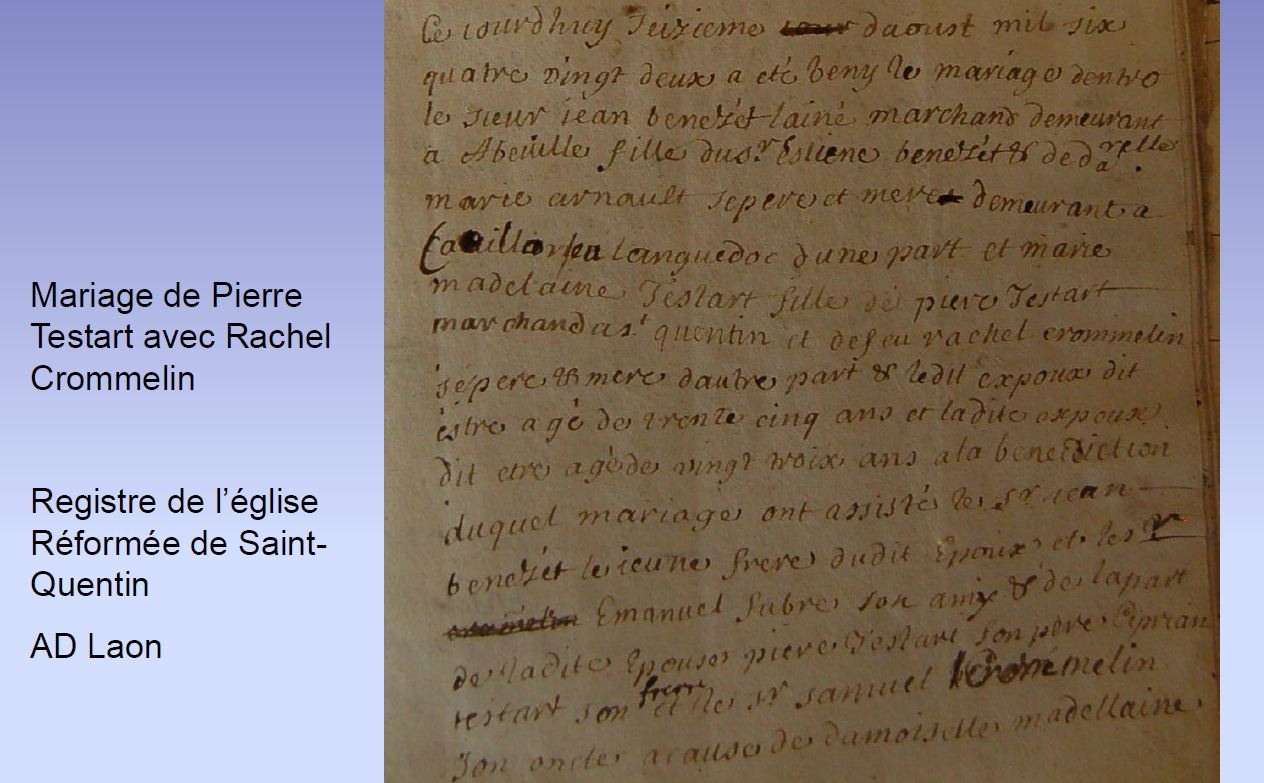
This act of marriage appears in the church registers of Lehaucourt. "Today, 16th of August 1682, was blessed the marriage of Sieur Jean-Etienne Bénézet the Elder, Merchant residing in Abbeville, son of the Sieur Jean Bénézet and Marie Arnault, his father and mother residing at Calvisson in Languedoc on the one hand, and Marie-Madelaine Testart, daughter of Pierre Testart, merchant in Saint-Quentin and of the late Rachel Crommelin, his father and mother of the other part."
Dans les registres de Lehaucourt, on y trouve leur acte de mariage. "Ce jourd’hui, seizième d’août 1682, a été béni le mariage du sieur Jean-Etienne Bénézet l’aîné, marchand demeurant à Abbeville, fils du sieur Jean Bénézet et damoiselle Marie Arnault, ses père et mère demeurant à Calvisson en Languedoc, d’une part et Marie-Madelaine Testart, fille de Pierre Testart marchand à Saint-Quentin et de feue Rachel Crommelin, ses père et mère d’autre part."
Deze akte van huwelijk verschijnt in de kerkelijke archieven van Lehaucourt. "Vandaag, 16 augustus 1682, werd het huwelijk van Sieur Jean-Etienne Bénézet the Elder, Koopman wonende in Abbeville, zoon van de Sieur Jean Bénézet en Marie Arnault, zijn vader en moeder wonende Calvisson in Languedoc enerzijds en Marie-Madelaine Testart, dochter van Pierre Testart, handelaar in Saint-Quentin en van wijlen Rachel Crommelin, zijn vader en moeder anderzijds."
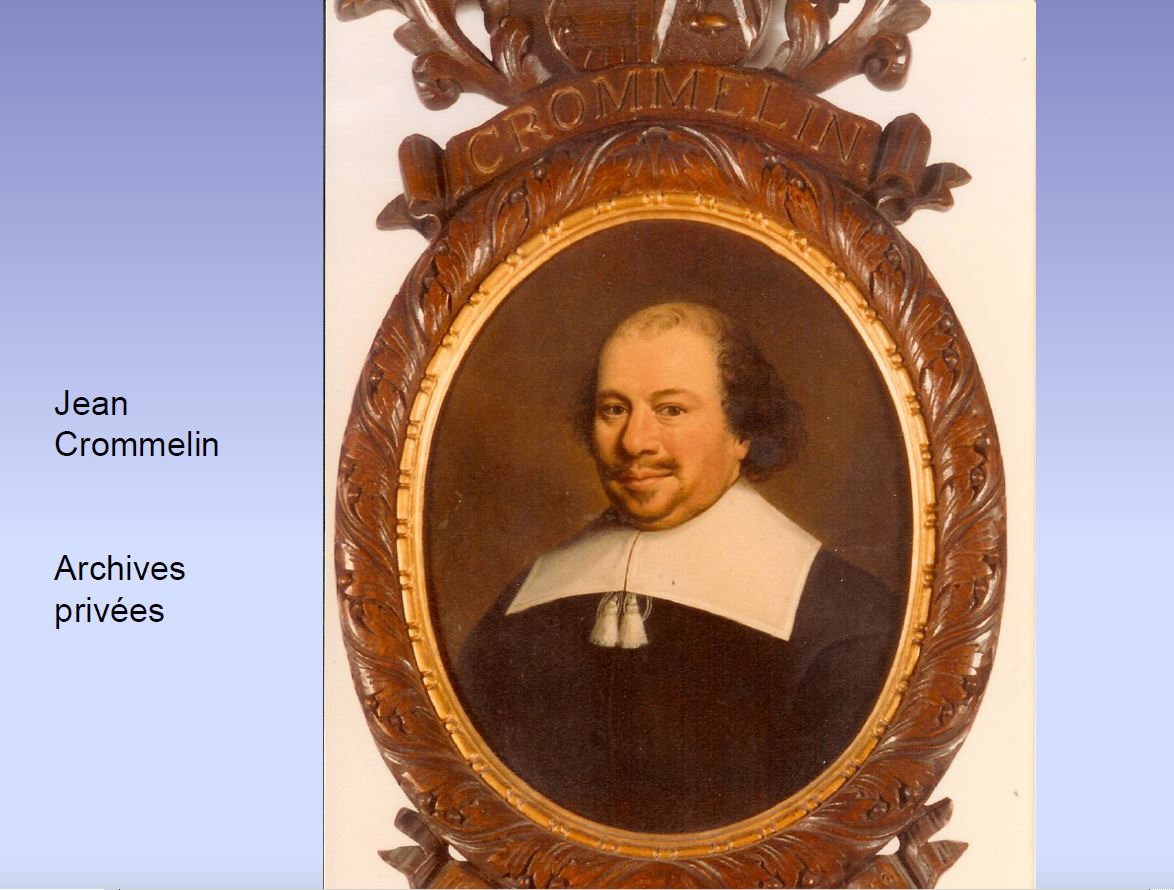
Rachel Crommelin's father is Jean Crommelin, son of Armand Crommelin, born in Courtai (then part of the Spanish Netherlands). Persecuted for the cause of Protestantism, he came to take refuge in Saint Quentin around 1570. There he brought the flax industry that would replace cloth and this industry brought wealth to the city. He is knighted by Henri IV in 1589 for services rendered to the country. The Crommelins are one of the richest families of Saint-Quentin. Armand and Jean Crommelin helped King Henri IV financially when he had major financial problems. Henri IV visited Armand Crommelin's industry and gave him titles of nobility.
Son père est Jean Crommelin, fils d’Armand Crommelin, né à Courtai (faisant alors partie des Pays-Bas espagnols). Persécuté pour cause de protestantisme ; il vient se réfugier à Saint Quentin vers 1570. Il y apporte l'industrie du lin qui va remplacer celle du drap et fait la richesse de la ville. Il est anobli par Henri IV en 1589 pour services rendus au pays. Les Crommelin sont une des familles les plus riches de Saint-Quentin. Armand et Jean Crommelin aident financièrement le roi Henri IV qui a de gros problèmes financiers. Henri IV visite la manufacture d’Armand Crommelin et lui confère des titres de noblesse.
Rachel Crommelin's vader Jean Crommelin, zoon van Armand Crommelin, geboren in Courtai (daarna deel van de Spaanse Nederlanden). Wordt vervolgd voor de oorzaak van het protestantisme, kwam hij toevlucht te nemen in Saint Quentin rond 1570. Daar bracht hij de vlasverwerkende industrie ter vervanging van doek en deze bedrijfstak brachten rijkdom van de stad. Hij wordt geadeld door Henri IV in 1589 voor zijn diensten aan het land. De Crommelins zijn één van de rijkste families van Saint-Quentin. Armand en Jean Crommelin hielp koning Henri IV financieel toen hij had grote financiële problemen. Henri IV bezocht Armand Crommelin industrie en gaf hem de titels van adel.
Antoine Bénézet therefore is born into a family which has strong Protestant roots. The Protestants lived in Saint-Quentin without too many worries. They occupied the St. Thomas quarter which was reserved for them. They had their own school directed by women of their religion, and they are very rich. That is why the city council gave them "tolerable respect as well as to their family because of the amenities they bring to the mulquiniers of the city".
Antoine Bénézet est donc né dans une famille qui a depuis longtemps des racines fortement protestantes. Les protestants vivent à Saint-Quentin sans trop de soucis. Ils occupent un quartier, ont leur propre école dirigée par des femmes de leur religion, et ils sont riches, très riches. C’est pourquoi le Corps de ville leur a donné « la demeurance ainsi qu’à leur famille en raison des commodités qu’ils peuvent apporter aux mulquiniers de la ville ».
Antoine Bénézet is dus geboren in een familie die sterke protestantse wortels. De protestanten wonen in Saint-Quentin zonder al te veel zorgen. Zij bezetten een wijk, hebben hun eigen school geregisseerd door vrouwen van hun godsdienst, en ze zijn heel rijk. Daarom heeft de gemeenteraad gaf hen "tolerant houden alsmede aan hun familie vanwege de voorzieningen die ze meenemen mulquiniers van de stad".
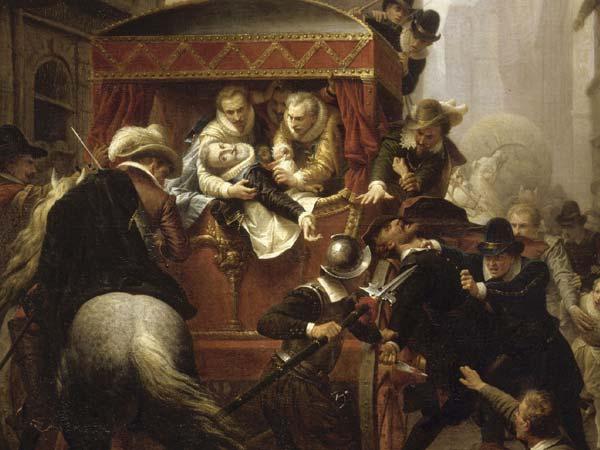
The assassination of Henri IV in 1610 jeopardized everything. The Bishop of Noyon, on whom the Bailiwick of Saint-Quentin rested, demanded to know who all the Huguenot families were. He had the parish priests conduct a census. The number of Protestants living in Saint-Quentin then gradually decreased.
L’assassinat d’Henri IV va tout remettre en cause. L’évêque de Noyon, dont dépend le bailliage de Saint-Quentin, exige de savoir où se trouvent les familles huguenotes. Il fait faire des recensements par les curés. Le nombre de protestants vivant à Saint- Quentin va alors diminuer progressivement.
De moord op Henri IV in 1610 gebracht. De bisschop van Noyon en aan wie het terrein van Saint-Quentin rustte, wilde weten wie de Hugenoten families waren. Hij had de parochiepriesters telling. Het aantal protestanten wonen in Saint-Quentin vervolgens geleidelijk afgenomen.
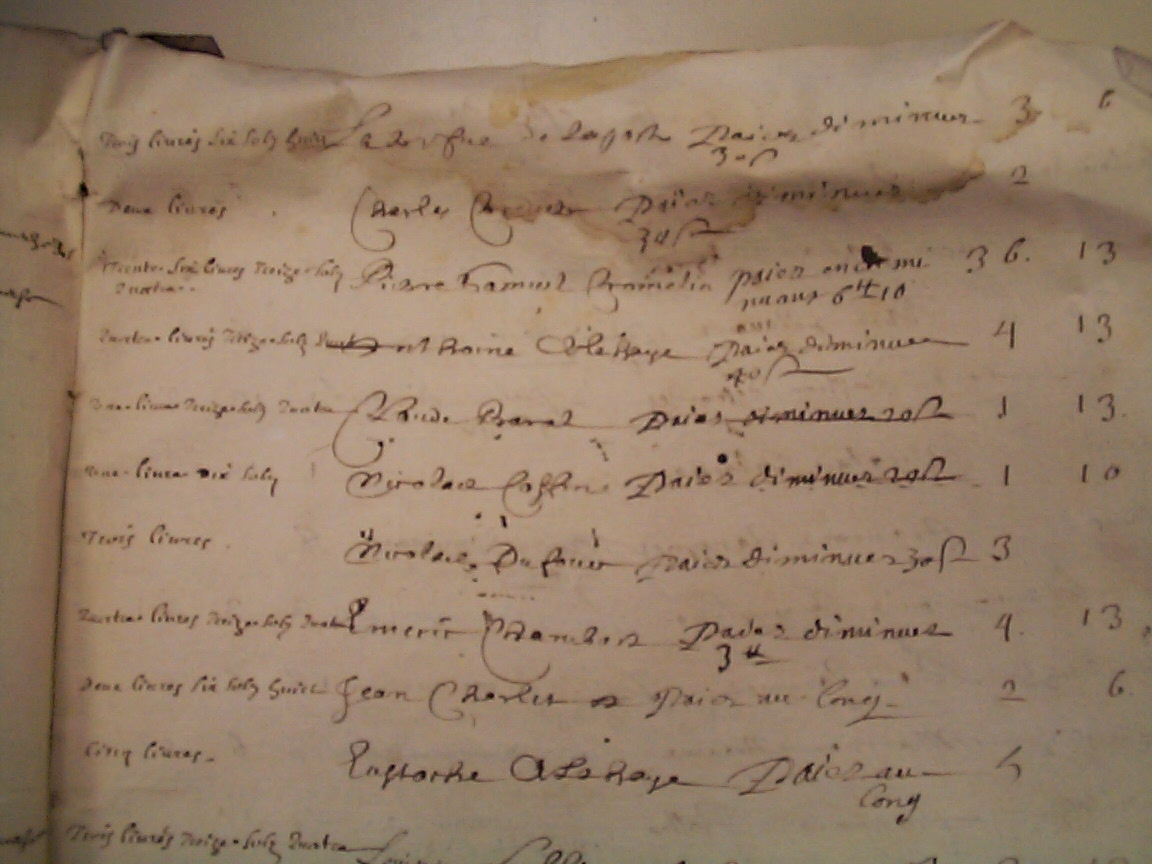
Pierre Samuel Crommelin was the richest man in
Vermandois and paid the most taxes.On 6 January 1639 he established a new tax on the property of foreigners. He would collect 58 000 livres from 58 families. Among these families were Marie de Sémeries, the widow of Jehan Crommelin, Pierre, Jehan and Adrien Crommelin, all three being sons of Jehan and Marie de Sémeries. Pierre Samuel Crommelin was the richest man in Vermandois and paid the most taxes.
Le 6 janvier 1639 est instituée une nouvelle taxe sur les biens des étrangers. On va prélever 58 000 livres sur 58 familles. Parmi ces familles, Marie de Sémeries, la veuve de Jehan Crommelin, Pierre, Jehan et Adrien Crommelin, tous les trois,fils de Jehan et de Marie de Sémeries.
Op 6 januari 1639 richtte hij een nieuwe belasting op het terrein van vreemdelingen. Hij zou verzamelen 58.000 livres van 58 gezinnen. Tussen deze families waren Marie de Sémeries, de weduwe van Jehan Crommelin, Pierre, Jehan en Adrien Crommelin, alle drie zijn zonen van Jehan en Marie de Sémeries. Pierre Samuel Crommelin was de rijkste man van Vermandois en betaalde de meeste belastingen.
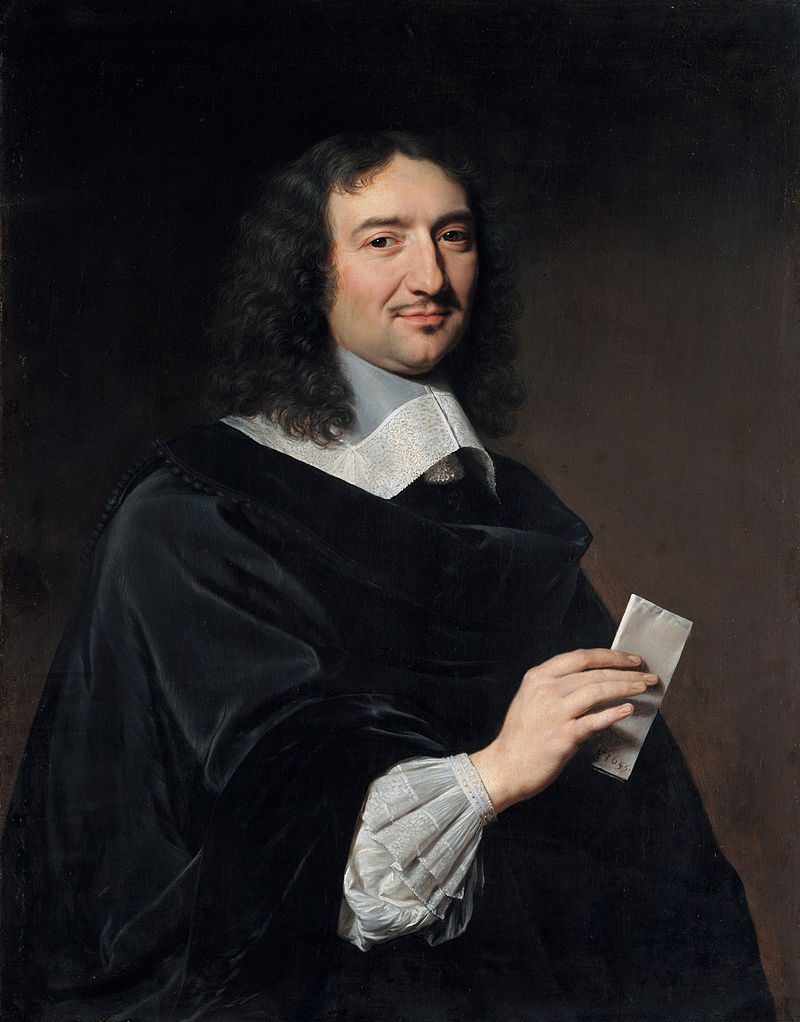
Jean-Baptiste Colbert, 1666,
Minister of Finances of France from 1665 to 1683The Mayor and aldermen of Saint Quentin then unleashed many strategies to induce the Protestants to leave the city. The latter sent a letter to Colbert complaining about having to look after the accommodation of the Lieutenant of the king and all the officers residing in the city, and that the aldermen of the city were showing little consideration for a family who had revived the fortunes of a city ruined by the wars and the entire region. In particular they emphasized the interests of the workers. This letter was signed by a dozen people including Pierre, Adrien, Louis, Jacob, Samuel and Abraham Crommelin. Colbert, in a letter of 13 August 1681, was concerned. He proposed the conversion of Huguenots to the Catholic religion and cautioned that they be prevented from leaving the region.
Le mayeur et les échevins de la ville vont déployer de nombreuses stratégies pour que les protestants quittent la ville. Ces derniers devront envoyer une lettre à Colbert pour se plaindre d’avoir à leur charge, les logements du lieutenant du roi et de tous les officiers résidant dans la ville et que les échevins de la ville ont bien peu de considération pour une famille qui avait fait renaître non seulement une ville ruinée par les guerres mais aussi toute une région. Ils insistent surtout sur les intérêts des ouvriers. Cette lettre est signée par une douzaine de personnes dont Pierre, Adrien, Louis, Jacob, Samuel et Abraham Crommelin. Colbert, dans un courrier du 13 août 1681, s’en inquiète. Il propose la conversion des huguenots à la religion catholique et surtout qu’on les empêche de quitter la région.
De Burgemeester en Schepenen van Saint Quentin en unleashed veel strategieën om de protestanten de stad te verlaten. Laatstgenoemde stuurde een brief naar Colbert klagen over hoeft te kijken na de accommodatie van de luitenant van de koning en alle medewerkers wonen in de stad, en dat de schepenen van de stad waren met weinig consideratie voor een familie die had revived bekleden van een stad geruïneerd door de oorlogen en de gehele regio. Met name zij gewezen op de belangen van de werknemers. Dit schrijven was ondertekend door een tiental personen waaronder Pierre, Adrien, Louis, Jacob, Samuel Abraham Crommelin. Colbert, in een brief van 13 augustus 1681. Hij stelde voor de conversie van Hugenoten naar de katholieke godsdienst en gewaarschuwd worden dat ze worden verlaten het gebied.
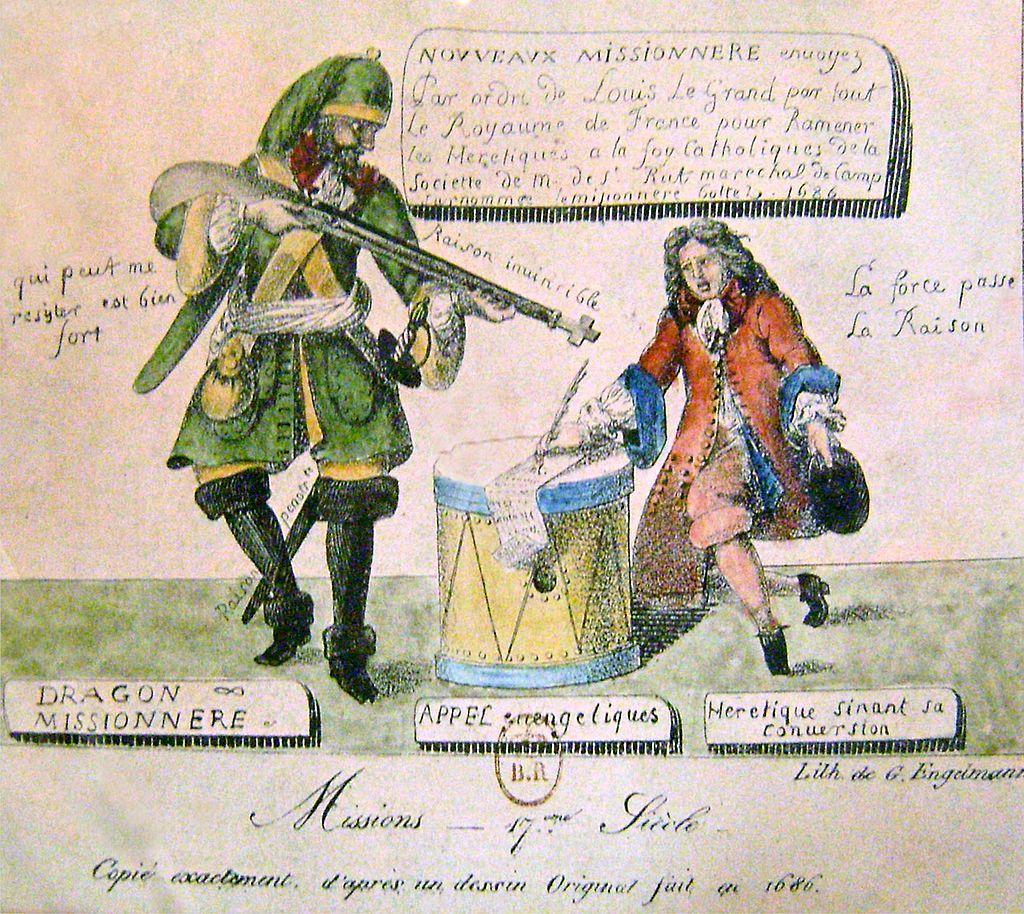
The Bishop of Noyon undertook visits to all the places infected by the 'heresy'. Persecuted again, some Protestants would recant but many decided to leave the city.
Amongst those who abjured:
Cyprian Testart November 15, 1685,
Jacques Lieurart, his wife Judith and their children on 17 November 1685
Adrien Crommelin January 11, 1700
Catherine Crommelin on January 26, 1700
Philippe Lieurart on September 29, 1699176 abjurations took place in the vicinity of the Church.
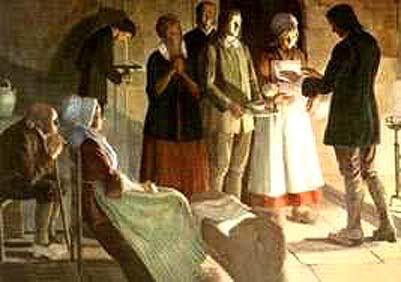
Others would not recant: 7 members of the Crommelin family and Abraham Lieurart. For them signing an act of abjuration under coercion was immoral and tortured their conscience. Soon they also took the road of exile.
Those who fled:
the family Crommelin, a dozen members
Pierre Testart
Madeleine Testart who fled with her daughters without abjuring. Later she returned to France; requested Catholic religious instruction, then returned to Holland with her husband, Jacob Crommelin. Shortly before this he had liquidated the Crommelin linen works in St. Quentin.
Many abandoned to the Crown their property, homes, and relatives in order to keep their faith. The Crommelin family motto became: Mieux Quitter Patrie Que Foi - Better to leave One's Home than One's Faith. Their departure had an impact on the industry, trade, and agriculture of the region.L’évêque de Noyon va entreprendre des visites dans tous les lieux infectés par l’hérésie. Persécutés à nouveau, certains protestants vont abjurer, mais beaucoup vont quitter la ville.
Vont abjurer :
Cyprien Testart le 15 novembre 1685,
Jacques Lieurart, sa femme Judith et leurs enfants le 17 novembre 1685
Adrien Crommelin le 11 janvier 1700
Catherine Crommelin le 26 janvier 1700
Philippe Lieurart le 29 septembre 1699176 abjurations auront lieu dans le rayon de l’église, d’autres n’auront pas lieu dans la localité de résidence des abjureurs : 7 membres de la famille Crommelin et Abraham Lieurart. Pour eux, l’acte qu’on les obligeait à faire était immoral et torturait leur conscience et bientôt ils prennent aussi le chemin de l’exil.
Vont fuir :
La famille Crommelin, une dizaine de membres
Testart Pierre,
Testart Madeleine, qui part avec ses filles sans abjurer, revient en France, demande l’instruction catholique pour repartir en Hollande rejoindre son mari.
Tous abandonnent à la couronne leurs biens, foyers, parentés, pour conserver leur foi. La devise des Crommelin n’est-elle pas : Mieux Quitter Patrie Que Foi ? Leur départ a des répercussions sur l’industrie, le commerce, l’agriculture.De bisschop van Noyon toegezegd bezoeken aan alle plaatsen die besmet zijn met de 'ketterij'. Opnieuw vervolgd worden, sommige protestanten zou weigerde maar veel besloten de stad te verlaten.
Onder diegenen die abjured:
Cyprian Testart November 15, 1685,
Jacques Lieurart, zijn vrouw Judith en hun kinderen op 17 november 1685
Adrien Crommelin Januari 11, 1700
Catherine Crommelin op januari 26, 1700
Philippe Lieurart op 29 september 1699176 abjurations vond plaats in de buurt van de kerk. Anderen zouden niet weigerde: 7 leden van de familie Crommelin en Abraham Lieurart. Voor hen die een akte van abjuration onder dwang was immoreel en gefolterd hun geweten. Zij binnenkort ook nam de weg van ballingschap.
Degenen die gevlucht:
de familie Crommelin, een dozijn leden
Pierre Testart
Madeleine Testart die vluchtte met haar dochters zonder abjuring. Later keerde zij terug naar Frankrijk, de gevraagde katholiek godsdienstonderwijs vervolgens teruggestuurd naar Holland met haar man, Jacob Crommelin. Kort voordat hij had geliquideerd de Crommelin linnen werkt in St. Quentin.
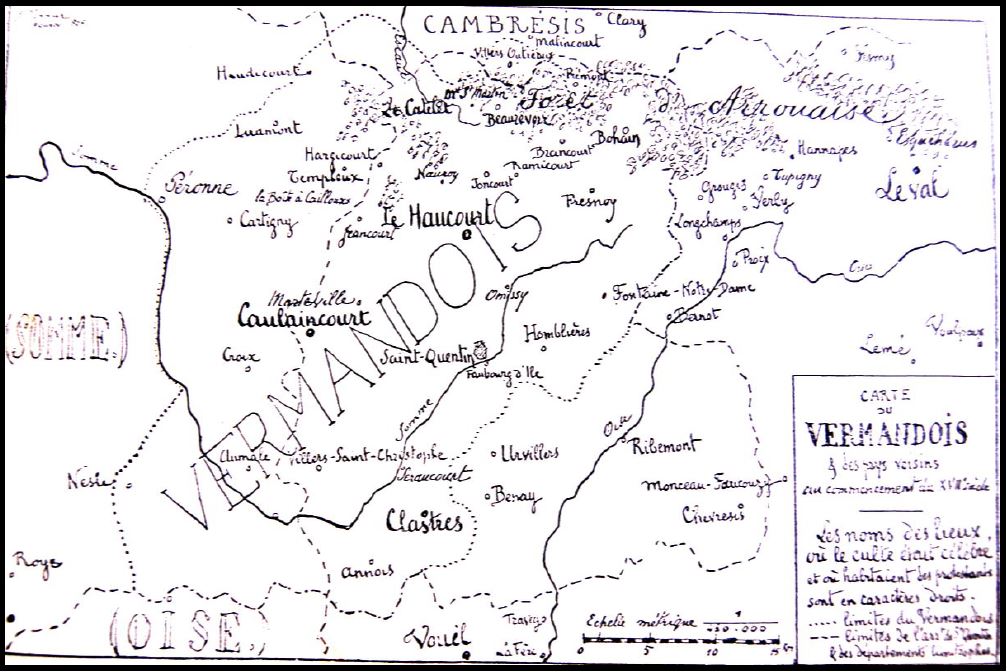
Velen verlaten de kroon hun eigendommen, huizen en verwanten om hun geloof. De familie Crommelin motto geworden: Nog Quitter Patrie Que Foi - beter laat niemand thuis dan zijn geloof. Hun vertrek een impact had op de industrie, de handel en de landbouw in dit gebied.It is in this environment that Antoine Bénézet was born. Long protected by the services he had rendered, the property of Jean-Etienne of Bénézet was soon confiscated. Therefore they left France never to return. Antoine was only two years old. So what route would they take to leave France? There were soldiers on both sides of the border, but there was also the forest of Arrouaise which could offer some protection to runaways. Jacques Pannier tells how Jean-Etienne had taken a young guide who approached a sentinel at the border. He went forward with a sword in one hand and a bag in the other. He said to the guard, "Choose which you prefer. Either take this money and allow these these brave victims of persecution to pass, or resist and die." The guard took the wiser option and the whole family continued on up the road into Holland.
C’est dans ce contexte que naît Antoine Bénézet. Longtemps protégé par les services qu’il avait rendus, les biens de Jean-Etienne de Bénézet seront bientôt confisqués. Ils partent donc, parents et enfants. Antoine n’a que deux ans. Ils quittent la France pour ne plus jamais y revenir. Quel chemin empruntent-t-il ? De part et d’autre de la frontière, il y a des soldats mais il y a aussi la forêt d’Arrouaise qui va protéger les fuyards. Jacques Pannier raconte que Jean-Etienne avait pris un jeune guide qui, en arrivant près de la sentinelle, sortit un pistolet et une bourse : « Choisis : ou tu laisseras passer ces braves gens victimes des persécutions et tu seras récompensé, ou tu résisteras et tu mourras. » Le garde prit la bourse et toute la famille continua sa route jusqu’en Hollande.
Het is in deze omgeving dat Antoine Bénézet was geboren. Lang beschermd door de diensten die hij had verkregen, eigendom van Jean-Etienne van Bénézet werd snel in beslag genomen. Dus ze vertrokken Frankrijk nooit meer terug te keren. Antoine was pas twee jaar oud. Wat route zou zij Frankrijk te ontvluchten? Er waren soldaten aan beide zijden van de grens, maar er was ook het bos van Arrouaise kan bieden enige bescherming aan anderen lopen weg. Jacques Pannier vertelt hoe Jean-Etienne had een jonge gids die benaderd een sentinel bij de grens. Hij ging vooruit met een zwaard in de ene hand en een zak in de andere. Hij zei tegen de beschermkap, "kiezen die u het prettigst vindt. Neem dit geld en laat deze dappere slachtoffers van vervolging te passeren, of verzetten en sterven." De bewaker was verstandiger optie en het hele gezin bleef op de weg naar Holland.
The Bénézets went to Rotterdam, perhaps to look for Crommelins or Testarts. They stayed in Holland for two years and then crossed the North Sea to London where they settled until 1736. The Crommelins had already gone to England, so did they follow them? There are very few details about their life in England. We know that the father, Jean-Etienne Benezet, resumed a trade and that he remade a fortune. Antoine, however, was not interested in commerce. He started an apprenticeship but, finding the work too dull, he had to stop. At the age of 14 years he became acquainted with the Religious Society of Friends and became a "Quaker".
The Bénézets left for America, why? We don't know. Perhaps to follow a Quaker friend. Daniel Crommelin also emigrated to this country, but this may have been a coincidence. The Benezets chose Pennsylvania, a State with a majority of Quakers who worked in tranquility. Many farmers judiciously brought their agricultural equipment while others did not hesitate to begin farming. The bourgeois even brought their furniture. The workers worked in good conditions, and Quakers gave instruction to their children.
Les Bénézet vont jusqu’à Rotterdam, peut-être pour y retrouver les Crommelin, les Testart ? Ils ont le choix. Ils restent en Hollande pendant deux ans puis traversent la Mer du Nord pour Londres où ils s’installent jusqu’en 1736. Des Crommelin sont partis en Angleterre, les suivent-ils ?
On n’a que très peu de détails sur leur vie en Angleterre. On sait que le père Jean-Etienne reprend un commerce et qu’il refait fortune. Antoine n’est pas intéressé par le négoce. Il entre en apprentissage mais, de condition trop chétive, il doit arrêter. A 14 ans il fait connaissance avec la Société religieuse des Amis et en devient membre, "un quaker".Les Bénézet partent en Amérique, pourquoi ? On ne le sait pas. Suivre un ami quaker ? Daniel Crommelin s’est aussi exilé dans ce pays, peut-être une pure coïncidence. Ils choisissent la Pennsylvanie, un état avec une majorité de Quakers qui travaillent dans la sérénité, beaucoup d’agriculteurs qui ont eu soin d’apporter leur matériel et qui n’hésitent pas à se lancer dans l’élevage. Les bourgeois ont même amené leur mobilier. Les ouvriers travaillent dans de bonnes conditions. L’enseignement est donné aux enfants par les quakers.
De Bénézets gingen naar Rotterdam, misschien op zoek naar Crommelins of Testarts. Ze verbleven in Holland en daarna voor twee jaar stak de Noordzee naar Londen, waar zij zich vestigden tot 1736. De Crommelins reeds al naar Engeland, dus hadden ze ze volgen? Er zijn zeer weinig details over hun leven in Engeland. Wij weten dat de vader, Jean-Etienne Benezet, hervat een handels- en dat hij opnieuw een fortuin. Antoine was echter niet geïnteresseerd in de commercie. Hij begon als leerling, maar vinden het werk te saai, hij moest stoppen. Op de leeftijd van 14 jaar hij kennismaakte met het Religieus Genootschap der Vrienden en werd een "Quaker".
De Bénézets vertrokken naar Amerika, waarom? Weten we niet. Misschien een Quaker vriend. Daniel Crommelin ook uitgeweken naar dit land, maar dit is geen toeval. De Benezets koos Pennsylvania, een land met een meerderheid van de Quakers, die werkte in rust. Veel boeren oordeelkundig brachten hun landbouwmachines terwijl anderen niet aarzelen om te beginnen. De burgerij bracht zelfs hun meubels.
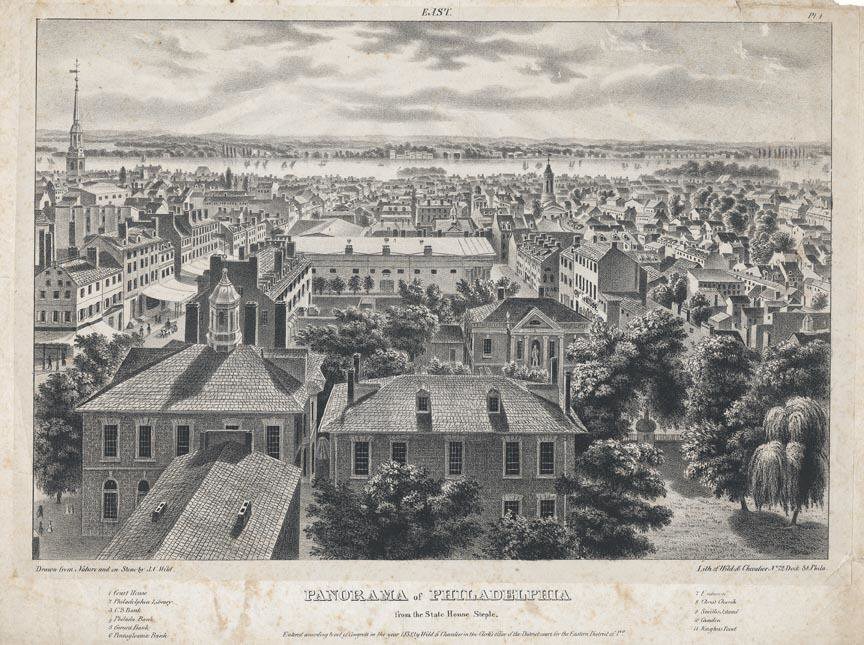
One can easily imagine the disorientation of the Bénézet family upon his arrival in Pennsylvania in November 1731. We have a description of Philadelphia by Brissot who is said to be a French citizen, in his book "New Travels in the United States of America", done in 1788. Here are a few excerpts.
"There is, in each Street, sidewalks of brick and small corridors with both sides built of bricks or wood. "
"At the door of every house you see a bench where the family sits in the evening to take pleasure in watching the people going by."
"There are little carriages in Philadelphia. There are very nice cars intended to carry the family - long, light, open and able to contain twelve people."
"Philadelphia is built on a regular plan. These are large and long streets that intersect from north to south, from the east to the west."
"The shops which adorn the main streets are remarkable for their cleanliness. There is the influence of the merchants of London."In 1736 Antoine Bénézet married Joyce Marriot, daughter of one who was devoted to the faith. After a few years of uncertainty, he decided to devote himself to the weakest as advocated in the Doctrine of the Quakers. He will become a teacher.
First he teaches in a school near Philadelphia, then in a class from the Superior School of Philadelphia. In 1755, he founded his own school. Instead of the rigorous discipline that was practiced then, he tried softness. He understood the students and kindled an interest for studies. He is one of the first to take an interest in deaf children who were then considered abnormal.
Brissot also tells us what he saw in the schools.
"I observed; I asked questions; I listened to the black children. Some read with ease; others recited by memory; others calculated fairly quickly.
"The School for black girls was no less impressive. In addition to reading and writing they learned manual arts such as using the spinning wheel, needle and thread, etc., and their mistress assured me that they show in general a lot of alertness. They had a decent attitude, were attentive and obedient. It was a nursery of good domestic servants and virtuous housewives. It is to Bénézet that America must credit this useful institution."In his school Bénézet understood very well that 'black' children must be educated. Then he resolved to devote his life to a class of men that most Americans considered to be beasts intended for suffering and slavery.
Les ouvriers travaillent dans de bonnes conditions. L’enseignement est donné aux enfants par les quakers. Ils vivent en autarcie.
On peut facilement imaginer le dépaysement de la famille Bénézet à son arrivée en Pennsylvanie en novembre 1731. Nous avons une description de Philadelphie par Brissot, qui se dit citoyen français, dans son livre « Nouveau voyage dans les Etats –Unis de l’Amérique septentrionale, fait en 1788 » dont voici quelques extraits.
« Il y a, dans chaque rue, des trottoirs en brique, et des petits couloirs des deux côtés, construits en briques ou en bois. »
« A la porte de chaque maison, vous voyez un banc ; la famille vient le soir prendre le frais et s’amuse à regarder les passants. »
« Il y a peu de carrosses à Philadelphie. On y voit des wagons très jolis qui sont destinés à transporter la famille, des voitures longues, légères, ouvertes et qui peuvent renfermer douze personnes. »
« Philadelphie est bâtie sur un plan régulier. Ce sont des larges et longues rues qui se croisent du nord au sud, de l’est à l’ouest. »
« Les boutiques, qui ornent les principales rues, sont remarquables par leur propreté. On y retrouve le goût des marchands de Londres. »Antoine Bénézet se marie en 1736 avec Joyce Marriot, jeune fille d’une grande dévotion. Après quelques années d’incertitude, il décide de se consacrer aux plus faibles comme le préconise la doctrine des Quakers. Il sera enseignant.
Il enseigne d’abord dans une école proche de Philadelphie puis dans une classe de l’école supérieure de Philadelphie. En 1755, il fonde sa propre école. A la discipline rigoureuse qui se pratiquait alors, il essaie la douceur : comprendre les élèves, leur donner le goût de l’étude. Il est l’un des premiers à s’intéresser aux enfants sourds qui sont considérés comme des anormaux.
Brissot nous raconte aussi ce qu’il a vu dans les écoles
« J’ai vu, j’ai interrogé, j’ai entendu des enfants noirs, les uns lisaient avec facilité, d’autres répétaient de mémoire, d’autres calculaient assez rapidement. »
« L’école des filles noires ne m’a pas moins pénétré d’édification. Outre la lecture, l’écriture, on les forme au travail des mains, au rouet, à l’aiguille etc. et leur maîtresse m’assure qu’elles montrent en général beaucoup d’adresse. Elles avaient un air décent, attentif et soumis, c’était une pépinière de bonnes domestiques, de vertueuses ménagères.
« C’est à Bénézet que l’Amérique doit cet utile établissement. »Bénézet a très bien compris, dans son école, que les enfants « noirs » doivent être éduqués. Alors il se résout à consacrer sa vie à une classe d’hommes que la plupart des américains considèrent comme des animaux destinés à la souffrance et à l’esclavage.
Men kan zich goed voorstellen de desoriëntatie van de Bénézet familie na aankomst in Pennsylvania in november 1731. Wij hebben een beschrijving van Philadelphia van Brissot wie is een Frans staatsburger, in zijn boek "Nieuwe reizen in de Verenigde Staten van Amerika", opgemaakt in 1788. Hier volgen een paar fragmenten.
"Er is in elke straat, trottoirs van baksteen en smalle gangen met aan beide zijden gebouwd van steen of hout. "
"bij de deur van ieder huis zie je een bankje waar de familie zit in de avond genieten van het bekijken van de mensen heen."
"Er zijn weinig rijtuigen in Philadelphia. Er zijn heel mooi auto's bestemd voor het vervoer van het gezin - lange, lichte, open en geschikt voor 12 personen."
"Philadelphia is gebouwd op een regelmatige plan. Dit zijn grote en lange straten die elkaar van noord naar zuid, van oost naar west."
"De winkels die sieren de hoofdstraten zijn opmerkelijk voor netheid. Er is de invloed van de kooplui van Londen."In 1736 Antoine Bénézet getrouwd Joyce Marriot, dochter van iemand die was gewijd aan het geloof. Na enkele jaren van onzekerheid, besloot hij zich te wijden aan het zwakste zoals geformuleerd in de leer van de Quakers. Hij zal een leraar.
Eerst geeft hij les op een school in de buurt van Philadelphia, daarna in een klasse van de Superieure School Philadelphia. In 1755 richtte hij zijn eigen school. In plaats van het strenge discipline die werd beoefend dan heeft hij geprobeerd zachtheid. Hij begreep de studenten en ontstoken belangstelling voor studies. Hij is één van de eerste om zich bezig te houden met dove kinderen die jonger waren dan als abnormaal beschouwd.
Brissot vertelt ons ook wat hij zag in de scholen.
"Ik merkte; I gestelde vragen; ik heb geluisterd naar de zwarte kinderen. Sommige makkelijk leesbaar; anderen gereciteerd door geheugen; anderen berekend vrij snel."
"De School voor zwarte meisjes was niet minder indrukwekkend. Naast lezen en schrijven leerden handleiding kunst zoals het spinnewiel, naald en draad, enz. en hun meesteres mij verzekerd dat zij over het algemeen veel oplettendheid. Ze hadden een fatsoenlijke houding, was attent en volgzaam. Het was een kwekerij van goede huispersoneel en deugdzaam huisvrouwen."
"Het is Bénézet dat Amerika te crediteren dit nuttige instelling."In zijn school Bénézet begreep heel goed dat 'zwarte' kinderen moeten opvoeden. Daarna Hij opgelost te wijden aan zijn leven in een klasse van de mannen die de meeste Amerikanen beschouwd als beesten bestemd voor lijden en slavernij.
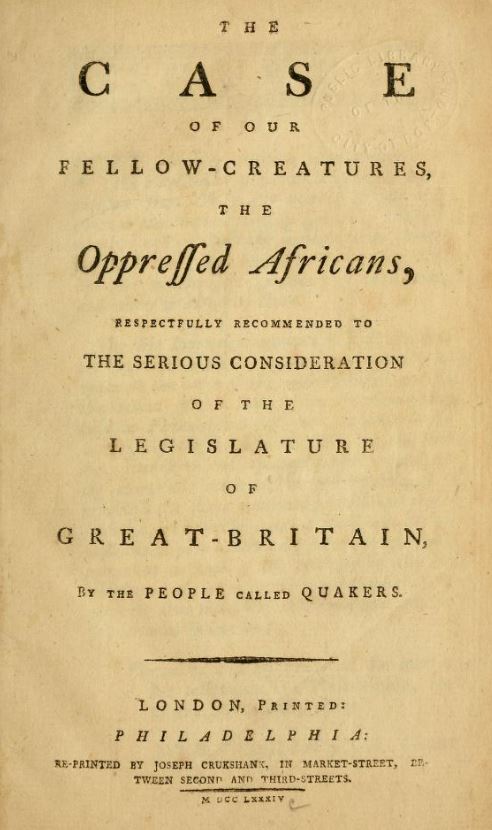
All of his free time was spent either in relief for the poor or in defense of the black slaves. Bénézet had a universal philanthropy which is still not very common. He looked upon men of all countries and colours as brothers. The time he didn't spend in his school was spent writing books condemning human trafficking and slavery. Several treaties come out of his pen, treaties that he always carried in his pocket and distributed. All those he met were given a petition for the defense of the blacks. The Society of Friends also distributed a profusion of his books. For Antoine Bénézet it wasn't enough to take the blacks out of slavery, but we must also teach them and find masters who would apply themselves to a task that prejudice had made painful. He provided the first example by devoting his fortune to the foundation of this kind of school. His brothers concurred, and thanks to their generosity and that of the Society of London, the school for the blacks of Philadelphia enjoyed a pension of 5000 francs. He opened the school in the evening. The teacher? Well, it would be him.
Tous ses moments de liberté sont employés soit au soulagement des pauvres, soit à la défense des esclaves noirs. Bénézet a une philanthropie universelle qui n’est pas encore très commune ; il regarde comme ses frères tous les hommes de quelque pays, de quelque couleur qu’il soit. Les moments qu’il ne passe pas dans son école, sont destinés à écrire des ouvrages qui peuvent servir à faire condamner la traite et l’esclavage. Plusieurs traités sortent de sa plume, traités qu’il emmène toujours dans une poche et qu’il distribue à tous ceux qu’il rencontre avec une pétition pour la défense des noirs. La Société des Amis, elle aussi, répand avec profusion ses ouvrages Pour Antoine Bénézet, il ne faut pas uniquement sortir les noirs de l’esclavage, il faut les instruire, il faut trouver des maîtres qui veulent se prêter à une tâche que le préjugé a rendue fort pénible. Il donne l’exemple le premier et consacre sa fortune à la fondation de cette école. Ses frères le secondent et grâce à leur générosité et à celle de la société de Londres, l’école des noirs de Philadelphie jouit d’une rente de 5 000 francs tournoi. Il ouvre une école du soir. L’instituteur ? Et bien ce sera lui.
Al zijn vrije tijd werd doorgebracht in reliëf voor de armen of ter verdediging van de zwarte slaven. Bénézet had een universele filantropie die nog niet erg gebruikelijk. Hij keek bij mannen van alle landen en kleuren als broeders. Het moment dat hij niet op zijn school werd uitgegeven boeken schrijven waarin mensenhandel en slavernij. Verscheidene verdragen uit zijn pen, verdragen dat hij altijd in zijn zak en gedistribueerd. Al die hij ontmoette kregen een petitie ter verdediging van de zwarten. De Vereniging van Vrienden ook een overvloed van zijn boeken. Voor Antoine Bénézet het was niet genoeg om de zwarten uit de slavernij, maar we moeten ook leren en vinden meesters die van toepassing zouden zijn op een taak die afbreuk had pijnlijk. Hij gaf het eerste voorbeeld van duurzame energiedragers zijn fortuin aan de basis van dit soort school. Zijn broers waren, en dankzij hun vrijgevigheid en dat van de Society of London, de school voor de zwarten in Philadelphia, genoten van een pensioen van 5000 frank. Hij opende de school in de avond. De leraar? Welnu, ik zou hem.
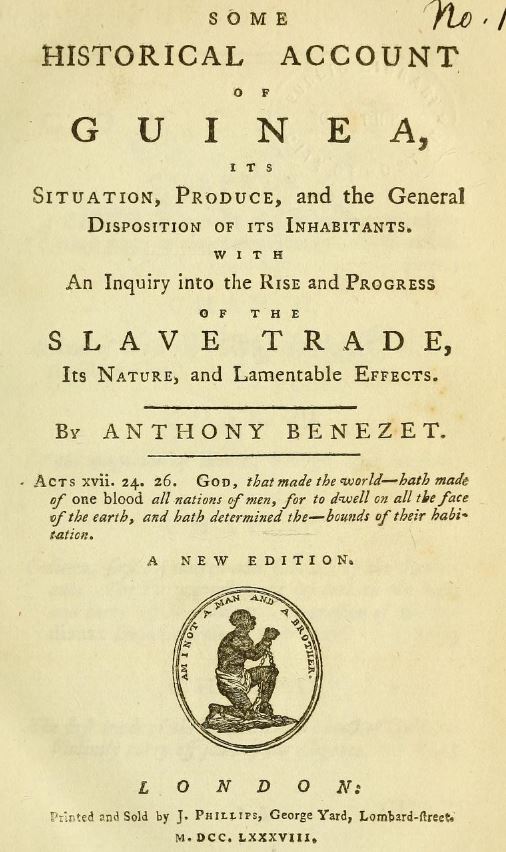
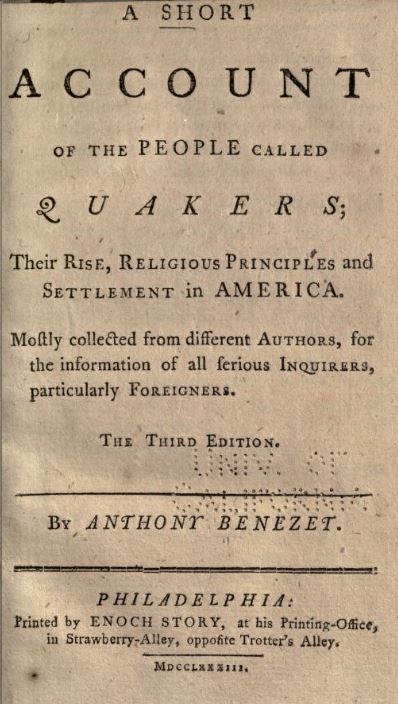
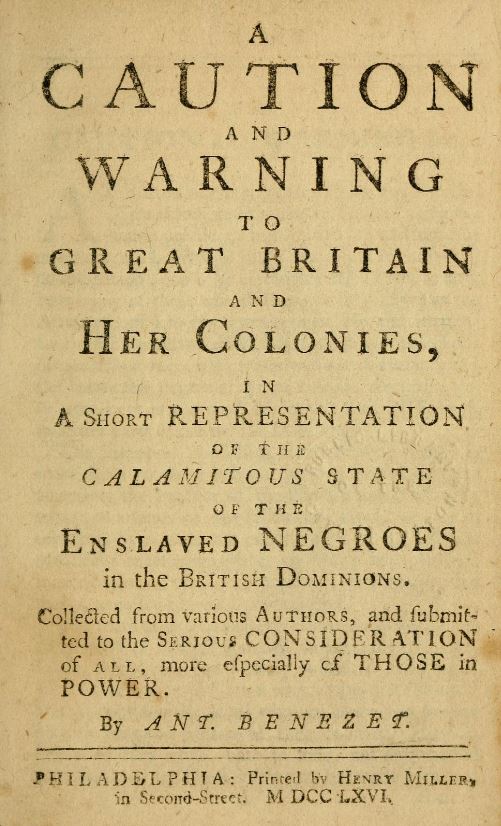
Soon afterward he sought to abolish all trafficking in slaves. He wrote two books, "Historical Account of Guinea and its Inhabitants" and "A Caution and Warning to Great Britain and Her Colonies". It is estimated that there were more than 800,000 slaves in the British colonies in 1772. In 1774 all members of the Society of Friends gave their slaves autonomy. All Quakers who refused to do so would be excluded from the association. Soon they were joined by the Friends who lived in the other colonies. In 1780 the draft of a first act on the abolition of slavery in Pennsylvania was drawn up.
Très vite, il cherche à abolir la traite. Il écrit deux livres « Description des régions de l’Afrique habitées par des nègres » « Avertissements à la Grande-Bretagne et à ses colonies sur l’état épouvantable des esclaves nègres. » En 1772, on évalue à plus de 800 000 esclaves dans les colonies britanniques. En 1774, tous les membres de la Société des Amis affranchissent leurs esclaves. Tous les quakers qui allaient refuser de le faire, seraient exclus de l’association. Bientôt, ils furent rejoints par les Amis qui vivaient dans les autres colonies. En 1780, on voyait l’ébauche d’un premier acte sur l’abolition de l’esclavage en Pennsylvanie.
Snel daarna zocht hij naar de afschaffing van alle handel in slaven. Hij schreef twee boeken, "Historisch overzicht van Guinee en haar inwoners" en "Een waarschuwing en waarschuwing aan Groot-Brittannië en haar koloniën". Er wordt geschat dat er meer dan 800.000 slaven in de Britse koloniën in 1772. In 1774 alle leden van de Vereniging van Vrienden die hun slaven. Alle Quakers die weigerde te doen zouden worden uitgesloten van de vereniging. Snel kregen ze gezelschap van de vrienden die leefde in de andere kolonies. In 1780 werd het ontwerp van een eerste akte betreffende de afschaffing van de slavernij in Pennsylvania was opgesteld."
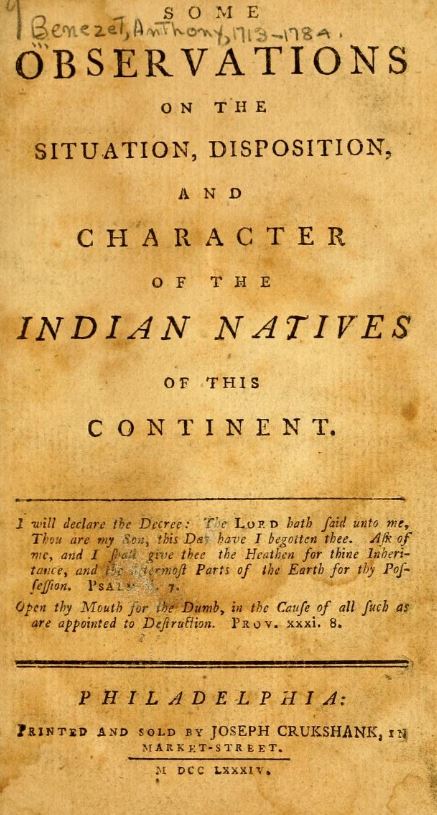
Antoine Bénézet will not only fight to abolish the slavery of blacks. He lives in the United States and the first inhabitants of this country are the Indians. He creates an association, the first of its kind, referred to as the 'Association for the amiable restoration and maintenance of peace with the Indians by peaceful measures'. The first members are the Friends, the Quakers, who already oppose the sale of alcohol to Indian tribes. Antoine Bénézet believes it is preferable to give them inclinations toward agriculture. He wishes to improve the plight of the weak and of humanity. He did not approve the behavior of the government and of Americans toward the Indians. The Society of Friends made many gestures of kindness to the latter by sending them clothing - a kind of Red Cross charity. Antoine Bénézet made frequent trips to go to meetings of the Indian chiefs despite his fatigue and despite rough conditions. He was in a fragile state of health. At the unveiling of his last will and testament it was noted that he had bequeathed sums of money for the opening of schools for Indian children.
Within the Society of Friends he was named an elder. He loved to wander in the mountain to read his sermons. He also continued to send letters around the world: to the King of Prussia; to the Queen of Spain; to the Queen of France; to Benjamin Franklin; to the abbot Reynal. In each letter he never failed to emphasize his incredulity regarding the situation of the weakest. "How could a scourge of nature so hideous exist for so long without it being regarded as a crime? How could they not be protected by governments and the law?" Undoubtedly because the men in power, ecclesiastical or otherwise, and the laity had ignored the roots of this terrible trade. He did not hesitate to request a hearing of senior officials, to meet with them and ask them for some kind of support.
Bénézet died on 3 May 1784 after atrocious suffering. At the announcement of his death the entire population wept the loss of their advocate, a man who had been able to make his life a fight for the abolition of slavery. On the day of his funeral, a considerable crowd gathered to pay their respects and esteem. Never had Philadelphia seen such a procession of Africans come to express their appreciation.
Antoine Bénézet ne va pas lutter uniquement pour abolir l’esclavage des noirs. Il vit aux Etats-Unis et les premiers habitants de ce pays sont les indiens. Il crée une association, la première du genre, dénommée Association amicale pour rétablir et maintenir la paix avec les indiens par des mesures pacifiques. Les premiers membres sont Les Amis, les quakers qui déjà s’opposent à la vente d’alcool aux tribus indiennes. Antoine Bénézet pense qu’il est préférable de leur donner des notions d’agriculture. Il veut améliorer le sort des plus faibles et de l’humanité. Il n’admet pas le comportement du gouvernement et des américains envers les indiens. La Société des Amis fait de nombreuses quêtes au profil de ces derniers pour leur envoyer des vêtements… une sorte de Croix Rouge avant l’heure. Antoine Bénézet fit de fréquents voyages pour aller à la rencontre des chefs indiens, malgré sa fatigue, malgré de mauvaises conditions, il est de santé fragile. A l’ouverture de son testament, on notera qu’il avait attribué plusieurs sommes d’argent pour l’ouverture d’une école pour les enfants indiens.
On sein de la Société des Amis, on le nomma Ancien. Il aimait se promener dans la montagne pour y lire ses sermons. Il continua aussi à écrire des lettres qu’il envoya dans le monde entier : au roi de Prusse, à la reine d’Espagne, à la reine de France, à Benjamin Franklin, à l’abbé Reynal. Dans chaque courrier, il ne manquait jamais de souligner son incompréhension devant la situation des plus faibles. « Comment un fléau d’une nature aussi hideuse, a-t-il pu exister si longtemps, sans qu’on en remarquât la criminalité ? Comment a-t-il pu être protégé par les gouvernements et consacré par la loi ? Sans doute parce que les hommes du pouvoir, soit ecclésiastiques, soit laïcs, ont ignoré la source de ce commerce affreux. Il n’hésitait pas à demander une audience aux hauts fonctionnaires, à les rencontrer et à leur demander un soutien quelconque.
Bénézet mourut le 3 mai 1784 après d’atroces souffrances. A l’annonce de son décès, la population entière pleura la perte de leur défenseur, un homme qui avait su faire de sa vie un combat pour l’abolition de l’esclavage. Le jour de ses funérailles, une foule considérable se déplaça pour lui témoigner respect et estime. Jamais Philadelphie n’avait vu un tel cortège d’africains venus exprimer leur reconnaissance.
Antoine Bénézet zal niet alleen strijd voor de afschaffing van de slavernij van de zwarten. Hij woont in de Verenigde Staten en de eerste bewoners van dit land zijn de indianen. Hij creëert een vereniging, het eerste in zijn soort, aangeduid als de "Vereniging voor de beminnelijke restauratie en onderhoud van vrede met de indianen door vreedzame maatregelen". De eerste leden zijn de vrienden, de Quakers, die al tegen de verkoop van alcohol aan indianenstammen. Antoine Bénézet volgens hem de voorkeur te geven aan ondernemingstalent landbouw. Hij wenst te verbeteren het lot van de zwakken en van de mensheid. Hij was niet akkoord met het gedrag van de overheid en van de Amerikanen tot de indianen. De Vereniging van Vrienden maakte veel gebaren van goedheid in het laatste door hun kleding - een soort Rode Kruis charity. Antoine Bénézet veelvuldig uitstapjes naar vergaderingen van de Indiase chiefs ondanks zijn vermoeidheid en ondanks de slechte omstandigheden. Hij was in een kwetsbare toestand van gezondheid. Bij de onthulling van zijn laatste wilsbeschikking werd opgemerkt dat hij had nagelaten sommen geld voor de opening van de school voor Indianse kinderen.
Binnen de Vereniging van Vrienden werd hij benoemd als een broer. Hij hield te dwalen in de berg te lezen zijn preken. Hij bleef ook brieven versturen over de hele wereld: van de Koning van Pruisen; aan de koningin van Spanje; de koningin van Frankrijk; Benjamin Franklin; de abt Reynal. In elke brief die hij nooit benadrukt dat zijn voorstellingsvermogen ver over de situatie van de zwakste. "Hoe kan een plaag van aard zo vreselijk bestaan voor zo lang zonder hem te beschouwen als een misdaad? Hoe kunnen ze niet beschermd worden door de overheid en de wet?" ongetwijfeld doordat de mannen in leidinggevende functies, kerkelijke of anderszins, en de leken uitgevoerd voorbij was gegaan aan de wortels van deze vreselijke handel. Hij schrok er niet voor terug te verzoeken om te worden gehoord van hooggeplaatste ambtenaren te ontmoeten en vragen om een soort van ondersteuning.
Bénézet overleden op 3 mei 1784 na de afgrijselijke lijden. Bij de aankondiging van zijn dood de hele bevolking gehuild omdat het verlies van hun advocaat, een man die in staat was geweest om zijn leven een strijd voor de afschaffing van de slavernij. Op de dag van zijn begrafenis, een aanzienlijke menigte verzamelde zich in hun respect en waardering. Nooit Philadelphia zo'n stoet van Afrikanen komen hun dankbaarheid te betuigen.